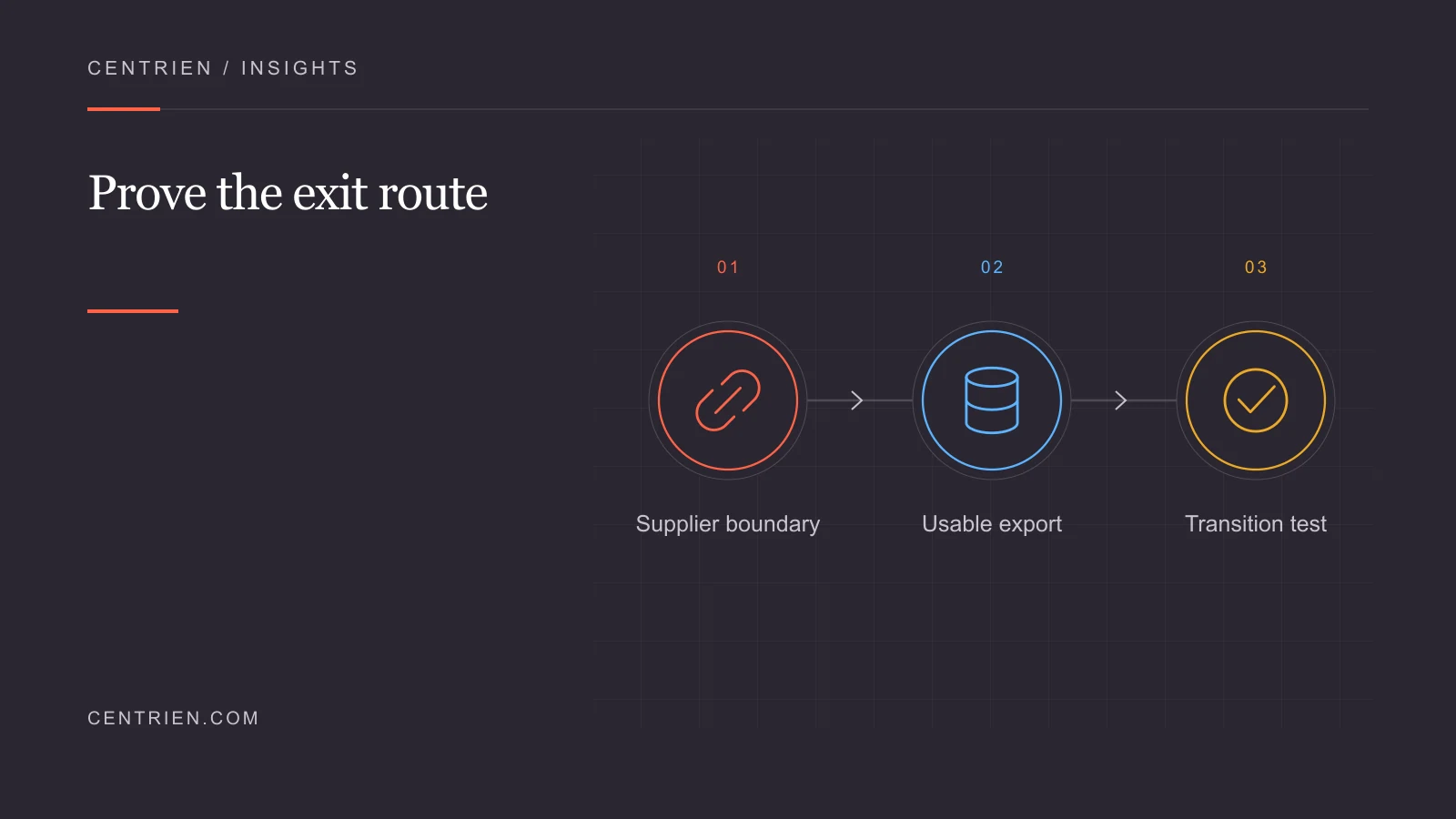
Centrien Insight
A termination clause is only one part of exit readiness. Test whether the operation can actually move.
An exit clause is useful when the institution can obtain usable records, restore the required service elsewhere, and remove the old provider’s access. Each of those capabilities deserves a test before the renewal deadline. Choose a limited service and agree the export format, dependencies, responsible owners, and validation method. Check subcontractors and any retained access. Keep the test proportionate to the service without confusing a small trial with proof of a complete transition.
Choose the service, not the contract file
Select a business activity whose interruption would matter to customers or operations. Map the applications, interfaces, records, authentication paths, and subcontracted services behind it. Then identify which contract covers each dependency. The Federal Reserve-hosted interagency third-party guidance includes transition and termination considerations within the relationship lifecycle. For an institution applying that guidance, the operational exercise below can support its own risk-management process; the test does not determine regulatory compliance or replace the institution’s review.
Ask for a representative export
Agree on a protected sample and an export method appropriate to the information involved. Include the field definitions, identifiers, timestamps, document links, historical changes, and reconciliation rules needed by a receiving team. A file count alone is weak acceptance: records may be present but unusable without relationships or proprietary reference data. Work with authorized test data where practical. Record transfer permissions and the obligations that continue after an export, including retention, deletion, confidentiality, and assistance during transition.
Make a receiving team use it
Have someone who did not create the export reconstruct a representative business workflow in a controlled environment. Ask them to find the right record, interpret its status, join related information, and explain a control total. Capture unanswered questions as migration dependencies. If an alternative provider is not selected, the exercise can still test whether the institution understands its own data and interfaces. Keep the test distinct from a production cutover: a successful sample proves the sample, not the readiness of the entire service estate.
Turn the result into a renewal decision
Bring the business owner, supplier manager, technology lead, and the relevant risk and legal reviewers together before the negotiation deadline. Compare the cost and time of an actual transition with the proposed renewal and its remaining limitations. Seek specific assistance or documentation where the test exposed a dependency. An accepted limitation should name its owner and the condition that triggers another review. Refresh the exercise after material format, integration, access, or service changes rather than treating the export as a permanent assurance artifact.
Put the plan into practice
- Bound the exit Identify one critical workflow and the information a successor would require.
- Reconcile the transfer Compare protected sample records, relationships, and control totals.
- Resolve the dependency Assign missing documentation, transition rights, and operating work to owners.
| Review area | Useful observation | Accountable role |
|---|---|---|
| Data portability | Receiving team can interpret selected records | Data owner |
| Service continuity | Representative workflow can be reconstructed | Business service owner |
| Exit assistance | Required supplier actions and timing are understood | Supplier manager |
Worked example
Illustrative inputs. An illustrative export contains all 5,000 expected rows, yet 300 documents cannot be matched because their external identifiers are missing. Row completeness is 100%; document linkage is unresolved. Recording both facts gives the renewal team a useful requirement. Reporting only the row count would hide the work that makes the information usable.
What a useful outcome looks like
The renewal pack should contain the tested service boundary, sample reconciliation, unresolved dependencies, estimated transition work, and a documented business decision. Keep contractual interpretations with the institution’s appropriate reviewers.
Bring the exit-test result to the renewal meeting. Price unresolved dependencies and assign the work needed to keep a credible transition option available.
References
Keep reading.
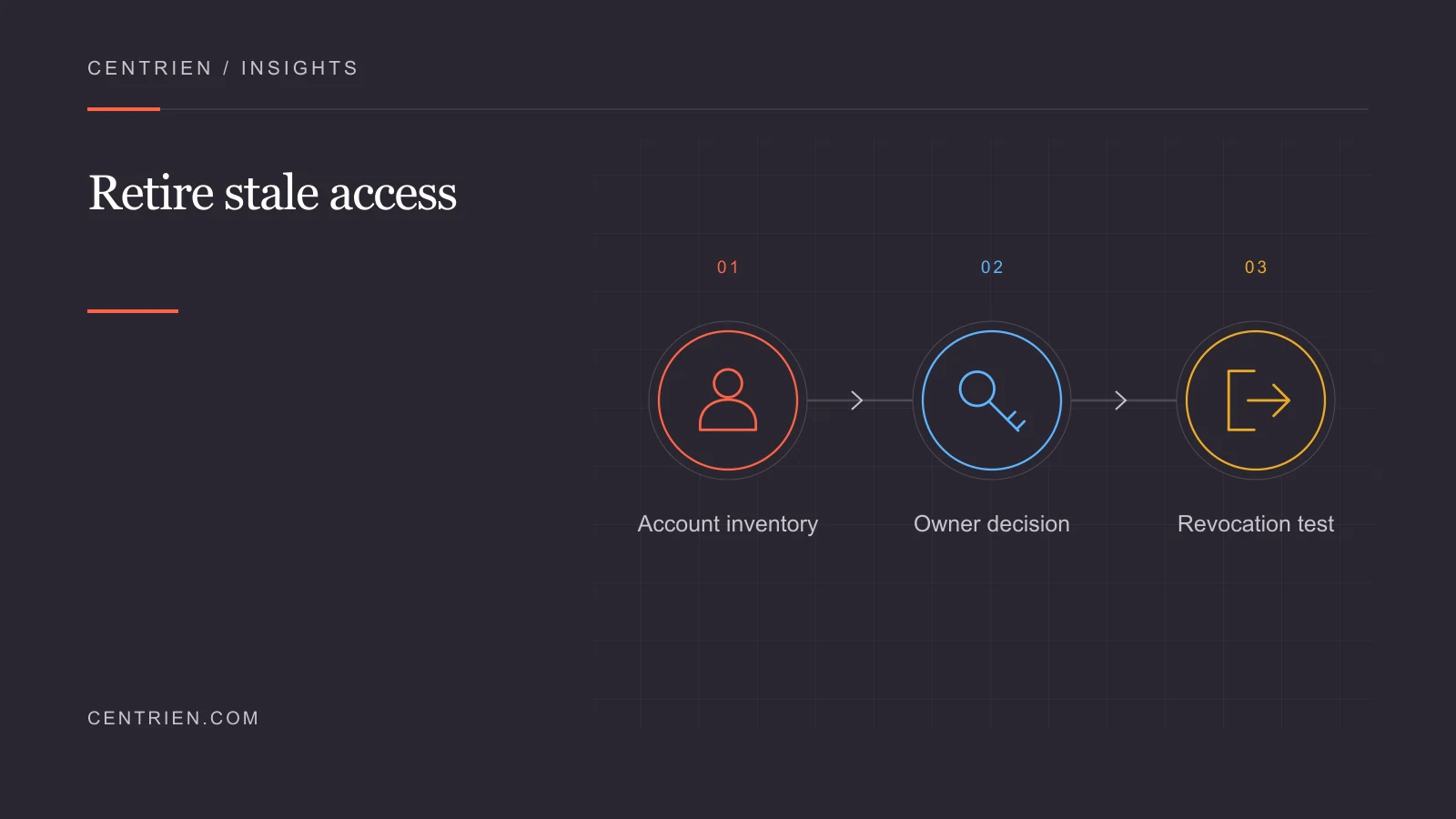
Your Access List Is a Museum. Time to Clean It Out.
An access review needs more than a list of active employees. Supplier accounts, service identities, inherited permissions, and active sessions can preserve access after the original reason has ended.
3 min read →
October 30 market close: Intel plunges, Nasdaq falls 2.86%
Intel falls 28.58% as its outlook weighs on technology. Nasdaq loses 2.86%, energy leads sector gains, and labor-cost data and weekly returns frame the Friday close.
4 min read →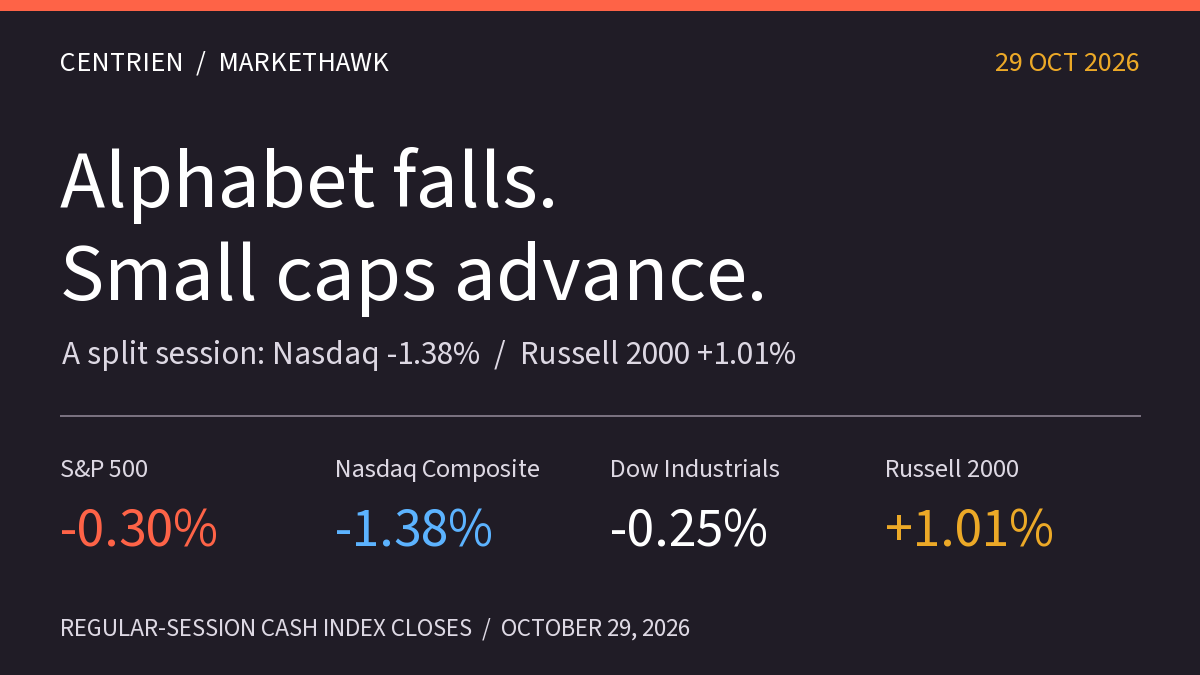
October 29 market close: Alphabet sinks, small caps advance
Alphabet falls 12.64% and the Nasdaq loses 1.38%, while small caps and nine sector ETFs gain. GDP, inflation and Amazon earnings frame a sharply divided session.
4 min read →