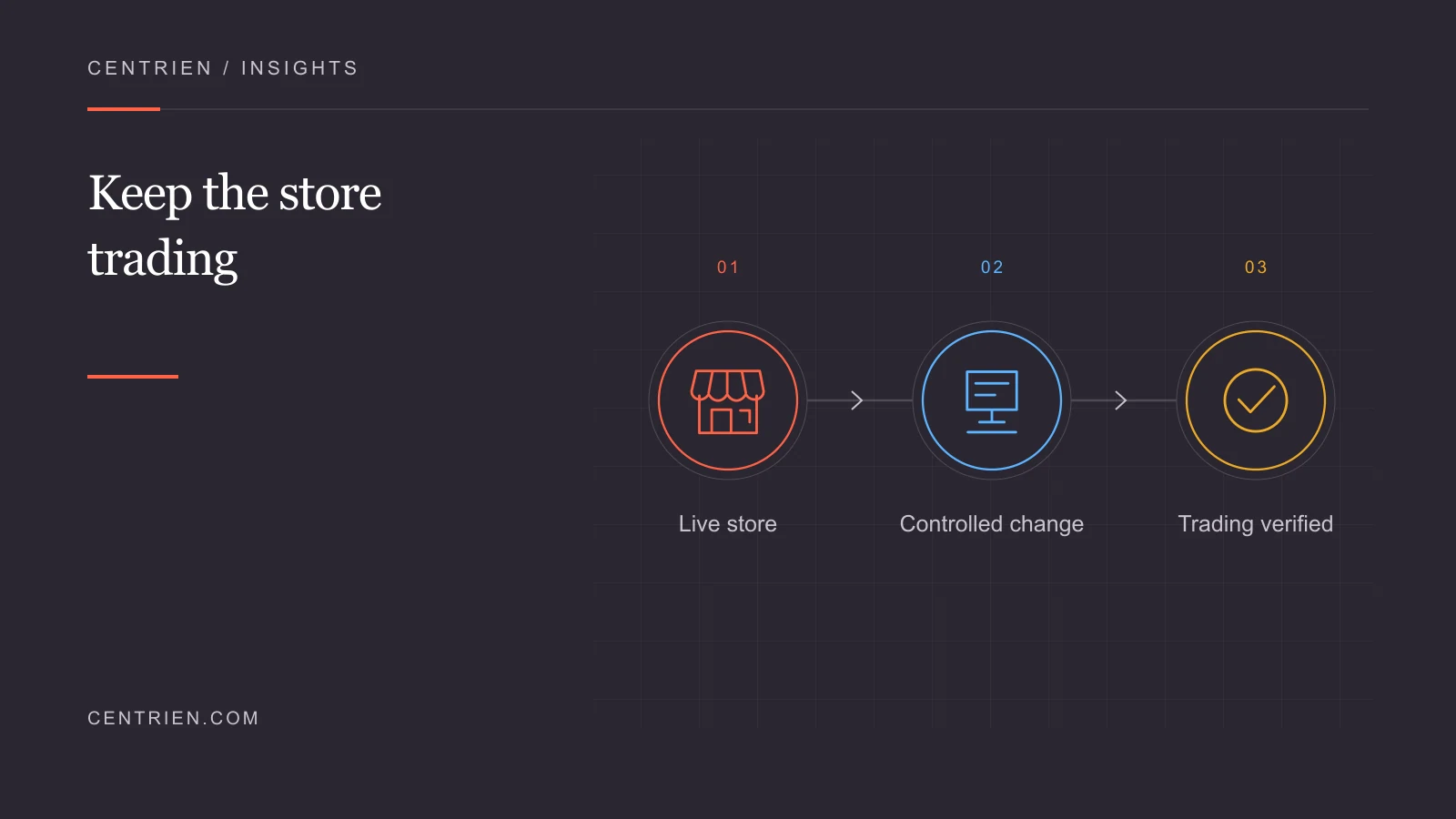
Prove the store can trade before cutover
A POS upgrade changes more than the register screen. Pricing, tax, tenders, returns, inventory, and daily reconciliation all need to work together before the store accepts the new system.
Build the pilot around actual trading cases, including exceptions that staff handle during a busy shift. Assign a person who can stop the cutover and define the conditions for rollback. Train the store team on those conditions before the deployment window.
Put it into practice
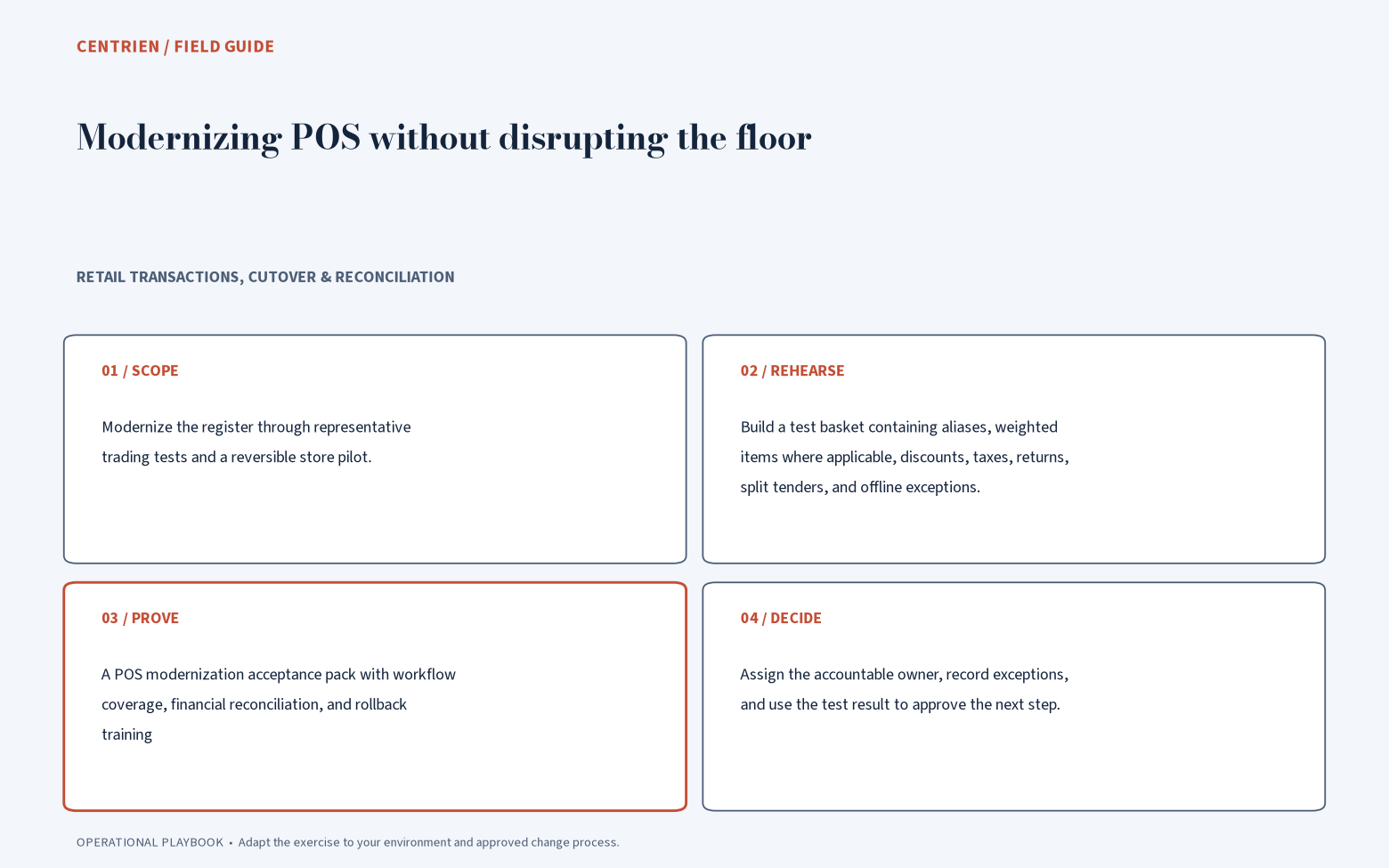
Build a test basket containing aliases, weighted items where applicable, discounts, taxes, returns, split tenders, and offline exceptions. Reconcile the outcome with the existing system and train store staff before approving a cutover window.
Implementation steps
- Define the trading scopeInventory registers, payment devices, tax and pricing rules, inventory interfaces, staff roles, and settlement responsibilities. Record which capabilities are demonstrated in the proposed release and which remain gaps.
- Run representative transactionsTest normal baskets and edge cases such as discounts, partial approvals, voids, refunds, connection loss, and interrupted completion. Use controlled test facilities and approved payment test procedures rather than real customer data.
- Reconcile across boundariesCompare register totals, tender records, processor or acquirer evidence, inventory movements, and accounting output. Verify that retries and timeouts do not create unexplained duplicates or missing transactions.
- Pilot with a rollback decisionTrain the store operator, rehearse recovery, agree a trading acceptance gate, and define who can stop the cutover. Preserve a usable prior configuration and reconcile data before widening the rollout.
Track workflow acceptance and tender reconciliation
| Measure | Calculation or definition | How to use it |
|---|---|---|
| Workflow acceptance | Representative workflows accepted / workflows required | Track capability gaps and approved exclusions explicitly. |
| Tender reconciliation | Transactions matched across required records / transactions tested | Investigate every unexplained mismatch before cutover. |
| Store readiness | Stores passing the agreed gate / stores planned for the wave | A shipped register or completed installation is not trading acceptance. |
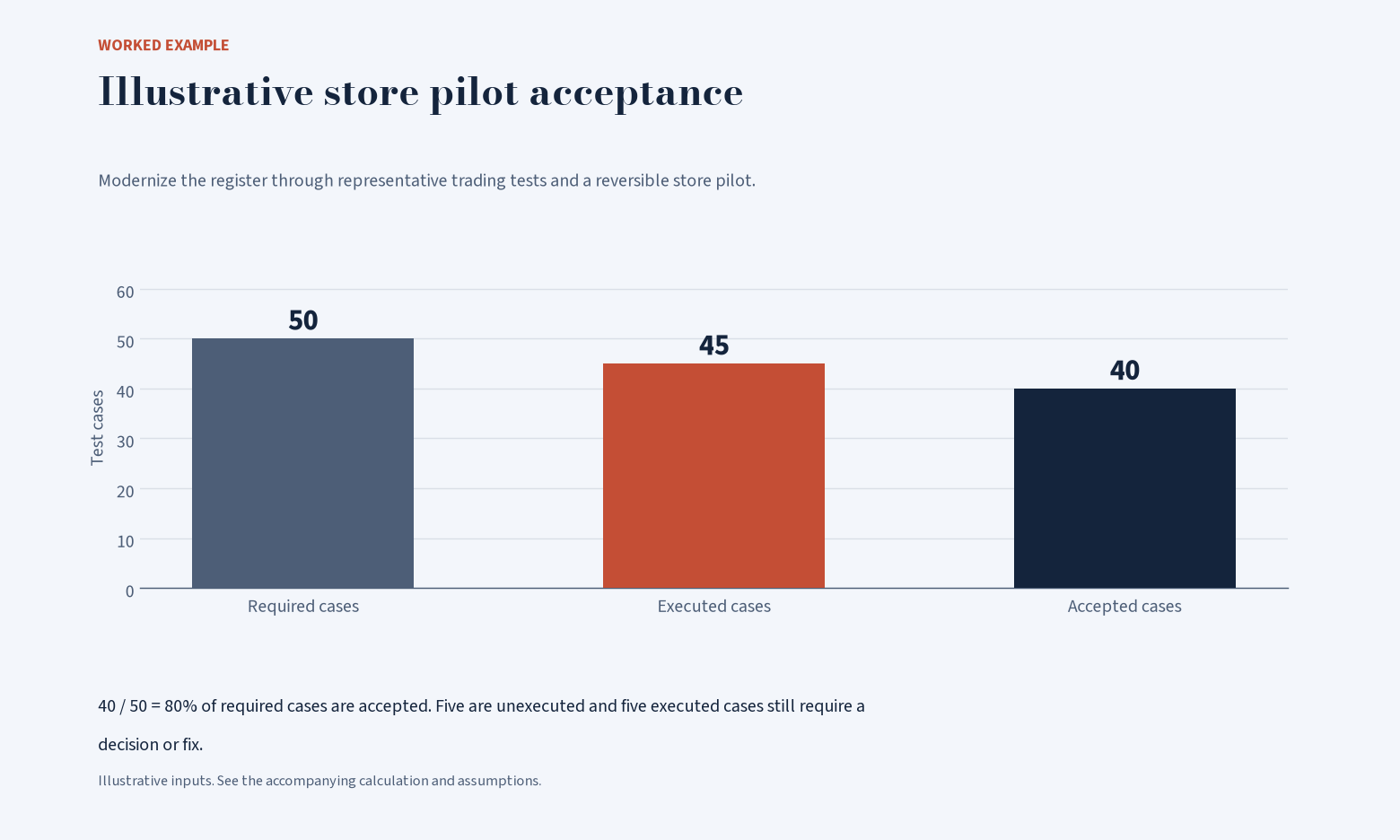
Illustrative store pilot acceptance
Worked example. Figures are illustrative.
| Observation | Test cases |
|---|---|
| Required cases | 50 |
| Executed cases | 45 |
| Accepted cases | 40 |
Complete required workflow tests and resolve payment exceptions before approving cutover.
The record to keep
The deliverable: A POS modernization acceptance pack with workflow coverage, financial reconciliation, and rollback training.
Approve the next store only after the pilot has completed a representative trading cycle and reconciled its results. Carry unresolved exceptions into an explicit decision rather than treating launch day as acceptance.
References
- PCI Security Standards Council: Document Library — Use the applicable PCI DSS documents and assessment scope when evaluating payment-data controls; a checklist does not certify compliance.
- NIST SP 800-34 Rev. 1: Contingency Planning — Use impact analysis, recovery priorities, exercises, and plan maintenance to structure continuity work.
Keep reading.
Your Access List Is a Museum. Time to Clean It Out.
An access review needs more than a list of active employees. Supplier accounts, service identities, inherited permissions, and active sessions can preserve access after the original reason has ended.
3 min read →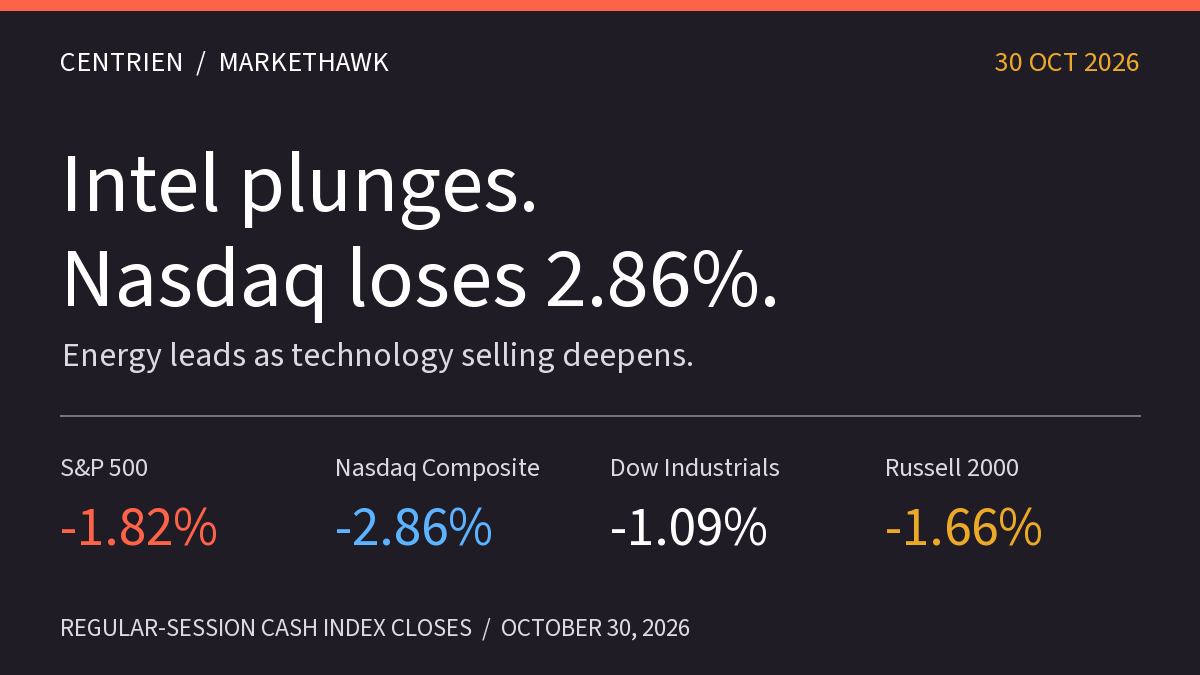
October 30 market close: Intel plunges, Nasdaq falls 2.86%
Intel falls 28.58% as its outlook weighs on technology. Nasdaq loses 2.86%, energy leads sector gains, and labor-cost data and weekly returns frame the Friday close.
4 min read →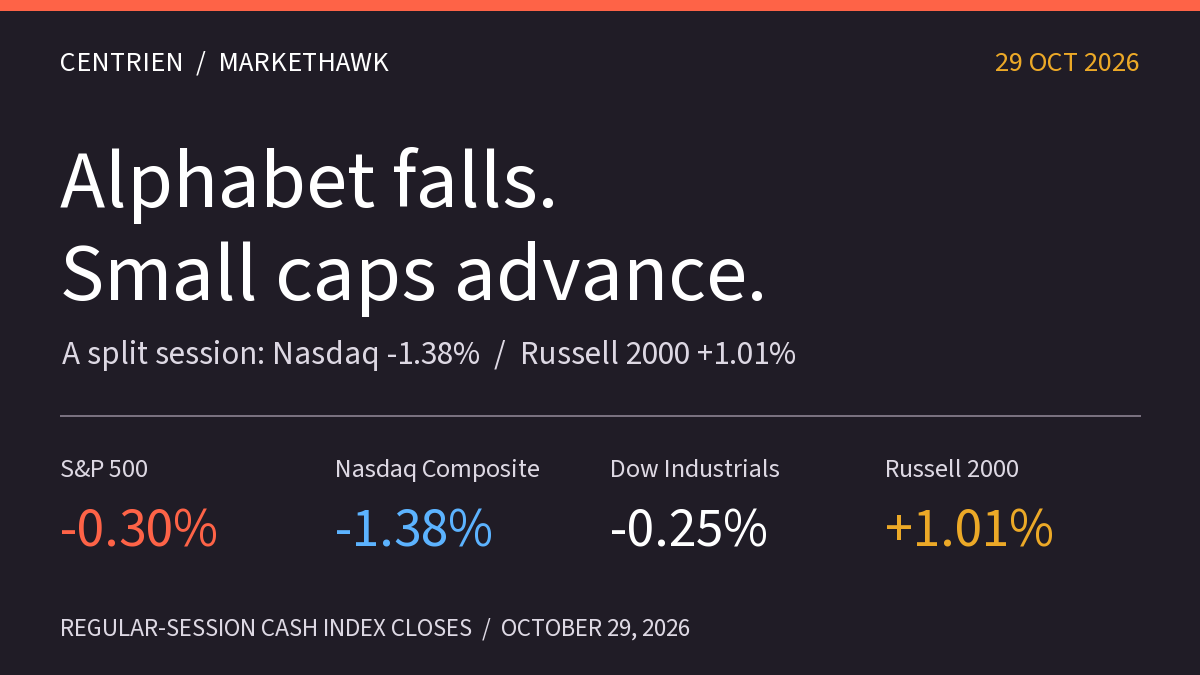
October 29 market close: Alphabet sinks, small caps advance
Alphabet falls 12.64% and the Nasdaq loses 1.38%, while small caps and nine sector ETFs gain. GDP, inflation and Amazon earnings frame a sharply divided session.
4 min read →