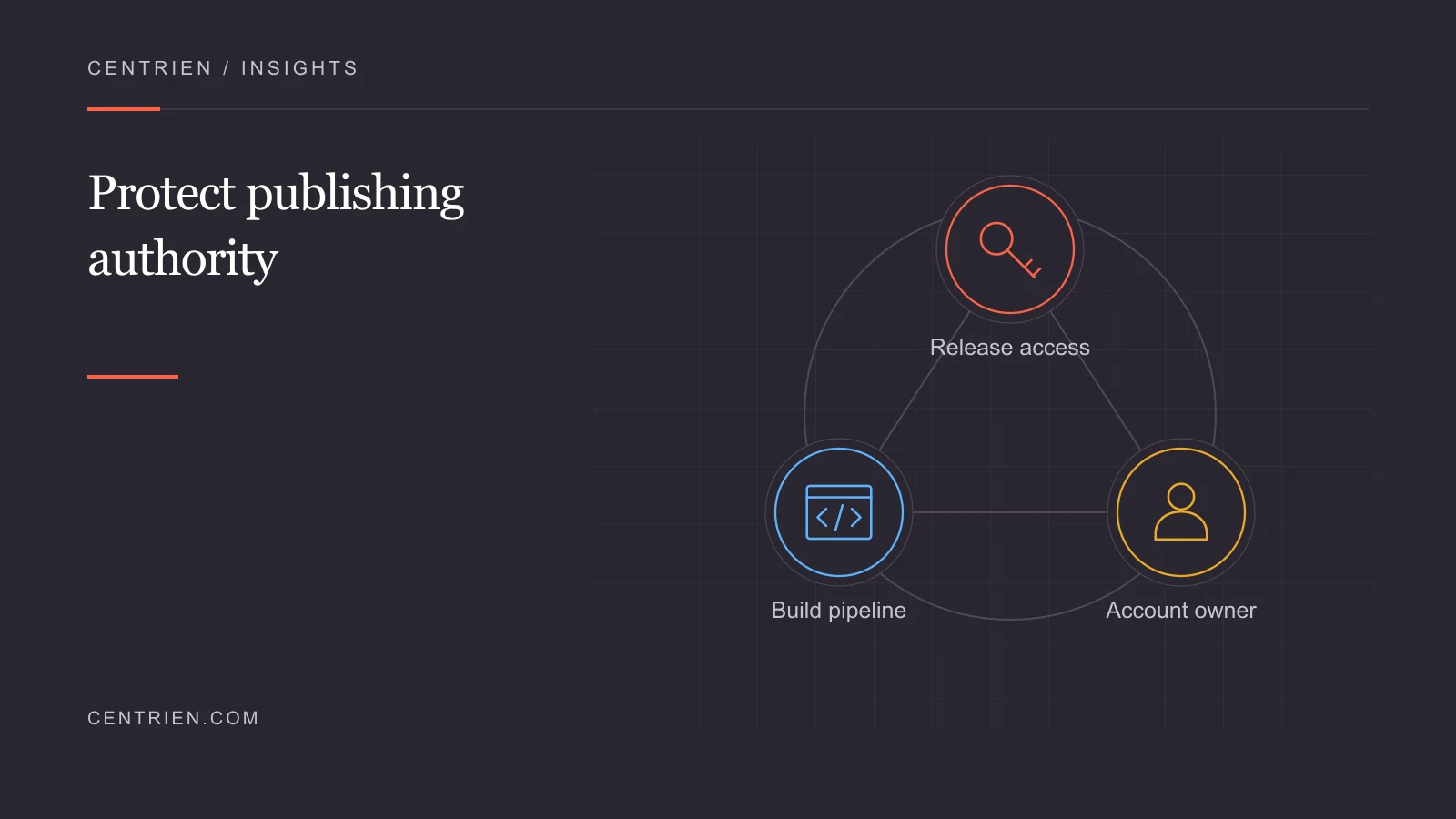
Publishing rights belong in the release plan
The person who controls a developer publishing account may be able to release software to every customer. Account ownership, automation credentials, and recovery methods therefore deserve the same attention as the production environment.
Check the provider’s current requirements and identify everyone who can publish, change owners, or recover the account. Give a backup administrator a supported recovery path. Test offboarding against active sessions and release automation as well as the visible user list.
Put it into practice
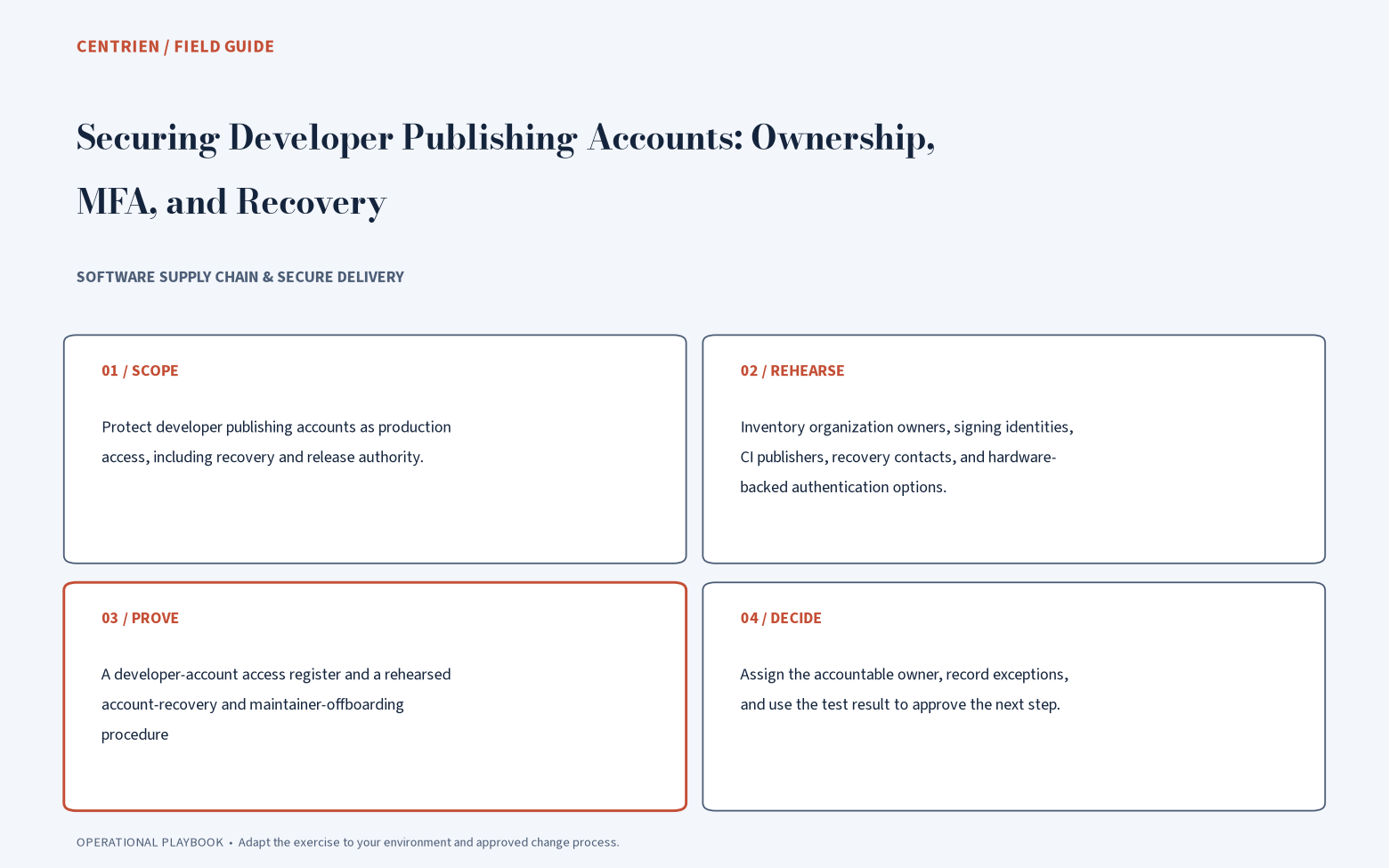
Inventory organization owners, signing identities, CI publishers, recovery contacts, and hardware-backed authentication options. Test that removing a maintainer also revokes release capability. Verify provider-specific requirements in the official console before relying on them.
Implementation steps
- Inventory release authority Record organization owners, human publishers, automation identities, signing access, and recovery contacts. Verify the provider-specific requirements in current official documentation.
- Test a supported backup route Have the authorized backup administrator validate access and recovery through the provider-supported method. Keep emergency instructions available without depending on the primary publisher.
- Verify maintainer removal Use an approved test identity or scheduled offboarding to check permissions, sessions, and automation credentials. Confirm the removed identity cannot publish or recover the account.
Track artifact traceability and actionable finding rate
| Measure | Calculation or definition | How to use it |
|---|---|---|
| Artifact traceability | Deployed artifacts linked to approved source and build / artifacts sampled | Investigate missing or inconsistent provenance. |
| Actionable finding rate | Findings confirmed to need action / findings reviewed | Report missed known cases alongside false positives. |
| Feedback time | Actionable result timestamp minus change submission timestamp | Optimize usefulness and coverage together instead of latency alone. |
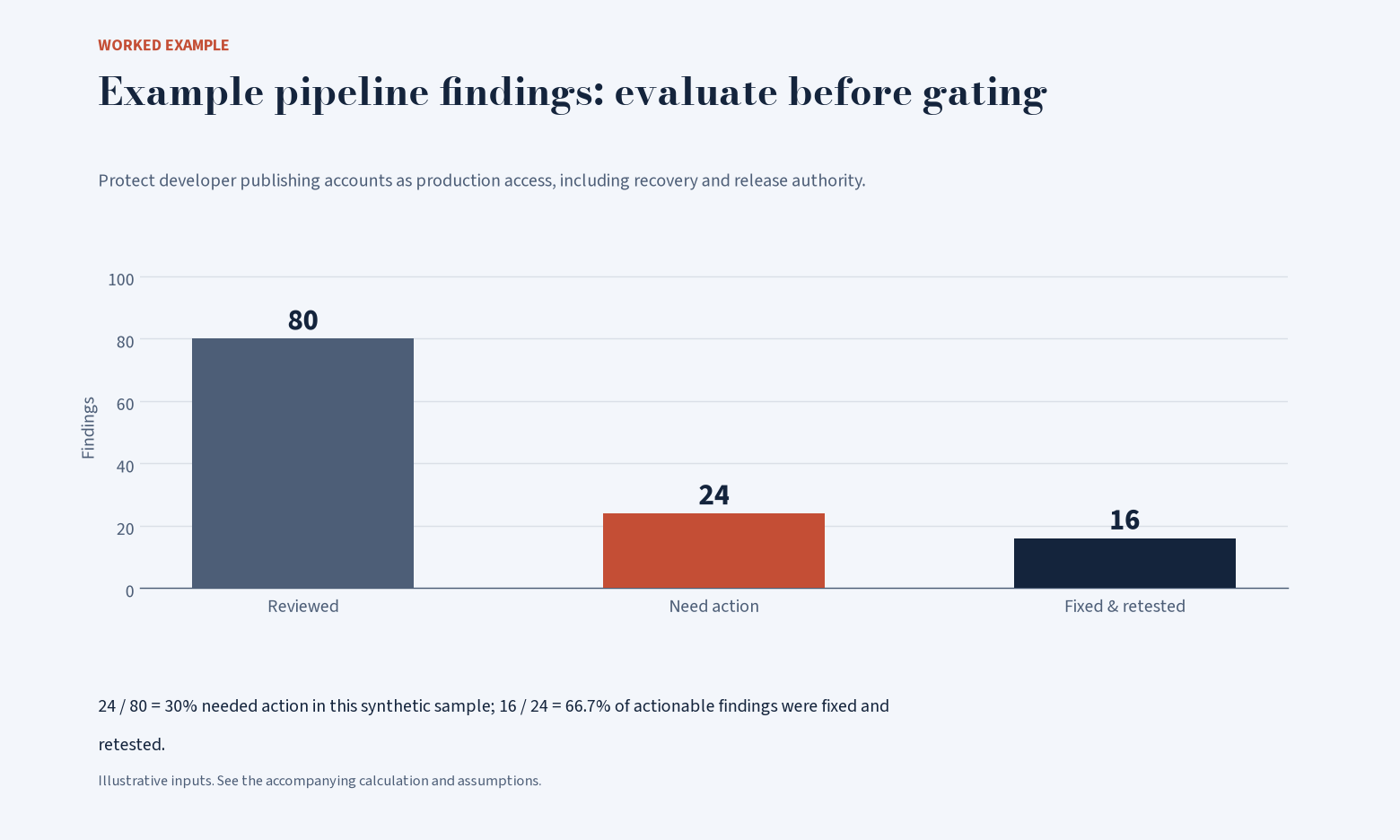
Example pipeline findings: evaluate before gating
Worked example. Figures are illustrative.
| Observation | Findings |
|---|---|
| Reviewed | 80 |
| Need action | 24 |
| Fixed & retested | 16 |
The other findings are not all necessarily false positives: duplicates, accepted risk, and out-of-scope items need separate dispositions.
The record to keep
The deliverable: A developer-account access register and a rehearsed account-recovery and maintainer-offboarding procedure.
A release should not depend on one employee’s phone or inbox. Verify the backup administrator’s access before the next ownership change, and keep the recovery record with the release documentation.
References
- NIST SP 800-218: Secure Software Development Framework — Organize secure development, software protection, vulnerability response, and supplier communication.
- NIST Cybersecurity Framework — Use outcomes and organizational context to organize the risk discussion; a framework mapping is not a control test.
Keep reading.
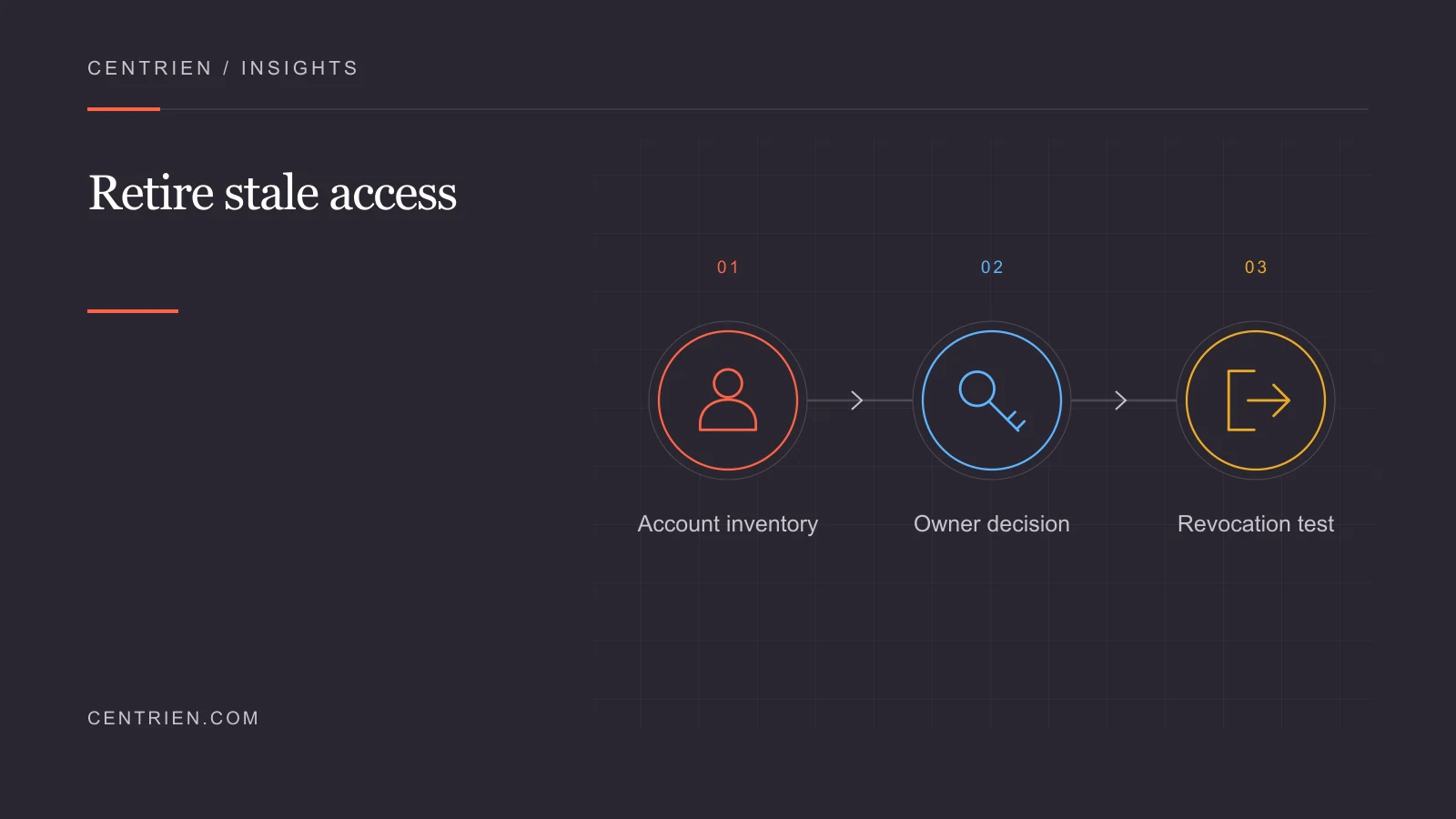
Your Access List Is a Museum. Time to Clean It Out.
An access review needs more than a list of active employees. Supplier accounts, service identities, inherited permissions, and active sessions can preserve access after the original reason has ended.
3 min read →
October 30 market close: Intel plunges, Nasdaq falls 2.86%
Intel falls 28.58% as its outlook weighs on technology. Nasdaq loses 2.86%, energy leads sector gains, and labor-cost data and weekly returns frame the Friday close.
4 min read →
October 29 market close: Alphabet sinks, small caps advance
Alphabet falls 12.64% and the Nasdaq loses 1.38%, while small caps and nine sector ETFs gain. GDP, inflation and Amazon earnings frame a sharply divided session.
4 min read →