Chip stocks brought buyers back. Communications shares went the other way.
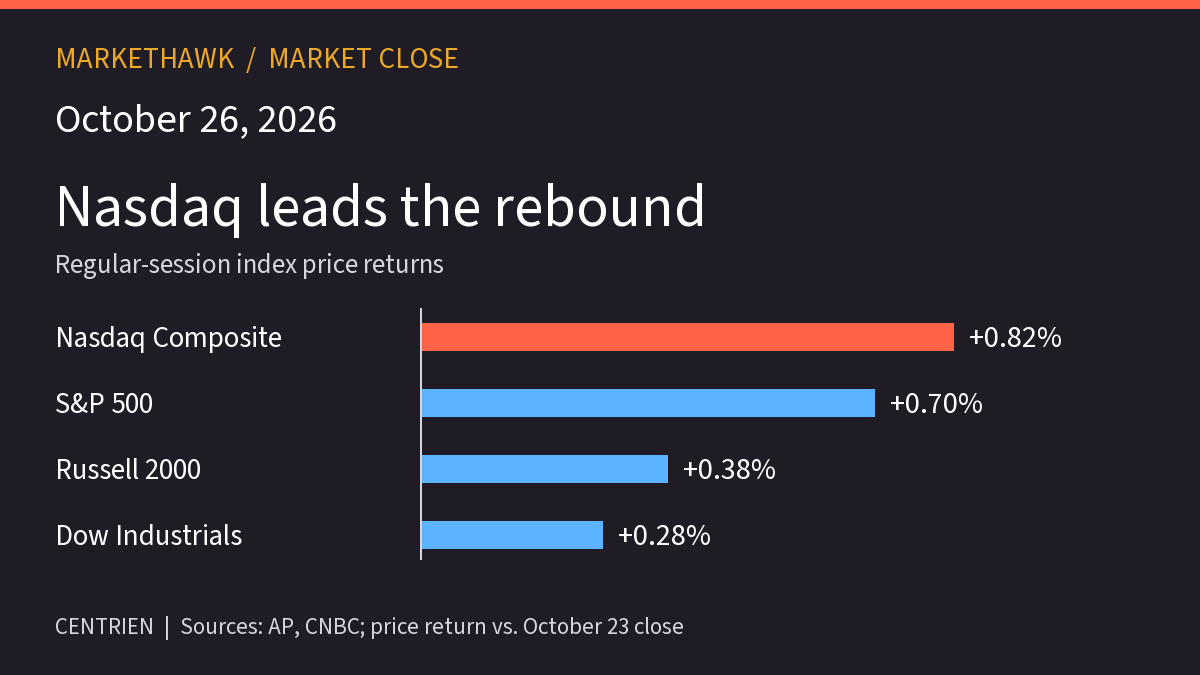
U.S. stocks advanced Monday as semiconductor shares rallied alongside news of Anthropic’s public IPO filing. The Nasdaq Composite led the major benchmarks, while a weaker communications group showed how uneven the recovery remained. CNBC’s closing report linked the renewed interest in AI shares to the filing.
Nasdaq sets the pace at the close
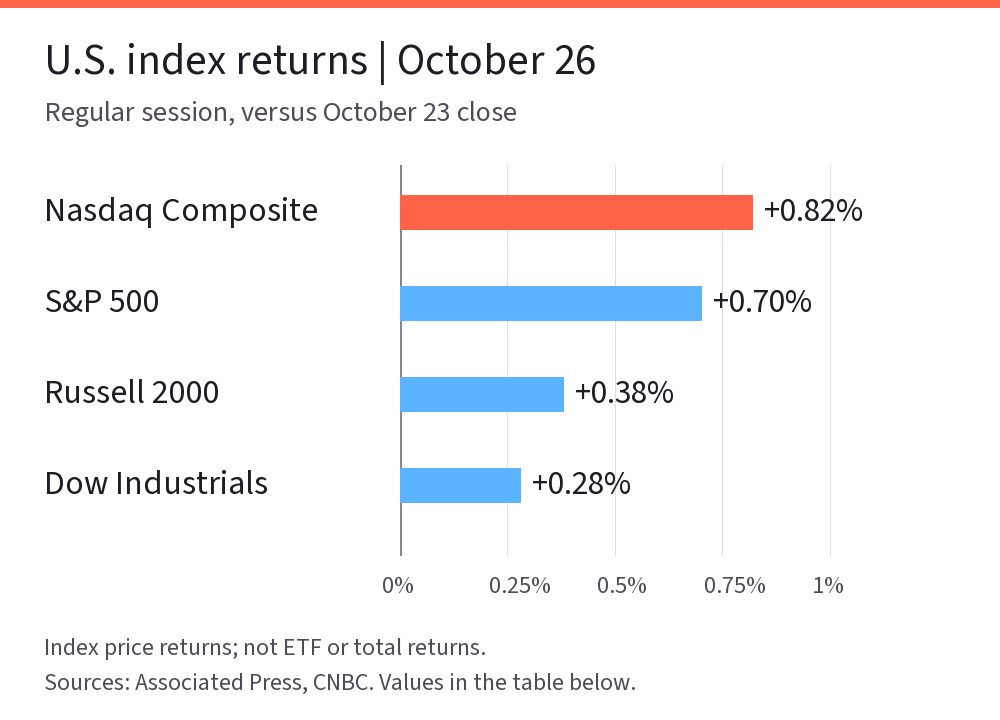
| Index | Close | Point change | Daily change |
|---|---|---|---|
| S&P 500 | 7,676.77 | +53.09 | +0.70% |
| Nasdaq Composite | 26,169.38 | +214.04 | +0.82% |
| Dow Jones Industrial Average | 52,361.58 | +146.42 | +0.28% |
| Russell 2000 | 2,786.42 | +10.53 | +0.38% |
The AP closing scorecard and Google Finance’s index board agree on these closing levels and point moves. Percentage changes are calculated against the previous close and rounded to two decimals.
The Nasdaq’s advantage over the Dow was about 0.54 percentage points. Small caps also rose, but their gain was less than half the Nasdaq’s. That combination supports a narrower reading of Monday: participation extended beyond the largest technology names, yet the strongest benchmark response remained in the technology-heavy Composite. Four rising indexes alone do not establish that most individual stocks advanced.
Technology strength meets communications weakness
The sector contrast was pronounced in the traded funds. The Technology Select Sector SPDR ETF (XLK) finished at $186.32, up 1.69%, while the Communication Services Select Sector SPDR ETF (XLC) fell 1.57% to $103.85. These are regular-session ETF market-price changes, not sector-index or net-asset-value returns; the linked pages show after-hours quotes separately.
Within the chip group, Nvidia gained 2.4%, Micron 3%, Broadcom 2.3%, and AMD 2.8%, according to CNBC’s closing coverage. Those moves give the rebound a specific industry focus. They do not show that every business exposed to AI received the same valuation response.
The distinction matters when comparing portfolios with the headline indexes. A technology fund and a communications fund can both hold businesses associated with digital infrastructure, advertising, or AI, while delivering opposite daily returns. Monday’s ETF results illustrate why the actual holdings and sector definitions matter more than treating the entire theme as one trade.
Oil eases; the 10-year yield stays near 5%
Brent crude futures settled at $115.81 a barrel, down 0.8%, in CNBC’s closing update, timestamped 4:12 p.m. Eastern. The decline supplied some relief alongside the equity rebound, but a lower daily oil price does not by itself resolve the inflation or supply risks priced into other markets.
The CNBC/Tradeweb U.S. 10-year Treasury quote showed a 4.99% yield at 4:05 p.m. Central. That is a timestamped bond-market observation, not an equity closing price or the Treasury’s daily par-yield fixing. The Cboe Volatility Index quote on Google Finance was 18.39 at 3:15 p.m. Central, down 1.06 points. It measures expected volatility from options prices; its decline is not a forecast that stocks will keep rising.
Tuesday brings confidence data and the Fed meeting
The next regular U.S. equity session is Tuesday, October 27. The following events were scheduled by Monday’s cutoff:
- 9:00 a.m. Central: October consumer confidence, according to The Conference Board’s release notice.
- 9:00 a.m. Central: September new residential sales, on the Census Bureau’s published schedule.
- October 27–28: The Federal Open Market Committee meeting begins Tuesday and concludes Wednesday.
- After Tuesday’s market close: Visa’s fiscal fourth-quarter and full-year results; its webcast is scheduled for 4:00 p.m. Central.
The immediate question is whether earnings and economic releases broaden Monday’s recovery beyond chip leadership. Consumer confidence and home sales offer separate views of household demand; neither is a substitute for a company’s reported revenue, margins, or financing needs. The Fed meeting adds another checkpoint for discount rates. Monday established a positive closing comparison for those developments, with a clear gap between technology strength and communications weakness.
Keep reading.
Your Access List Is a Museum. Time to Clean It Out.
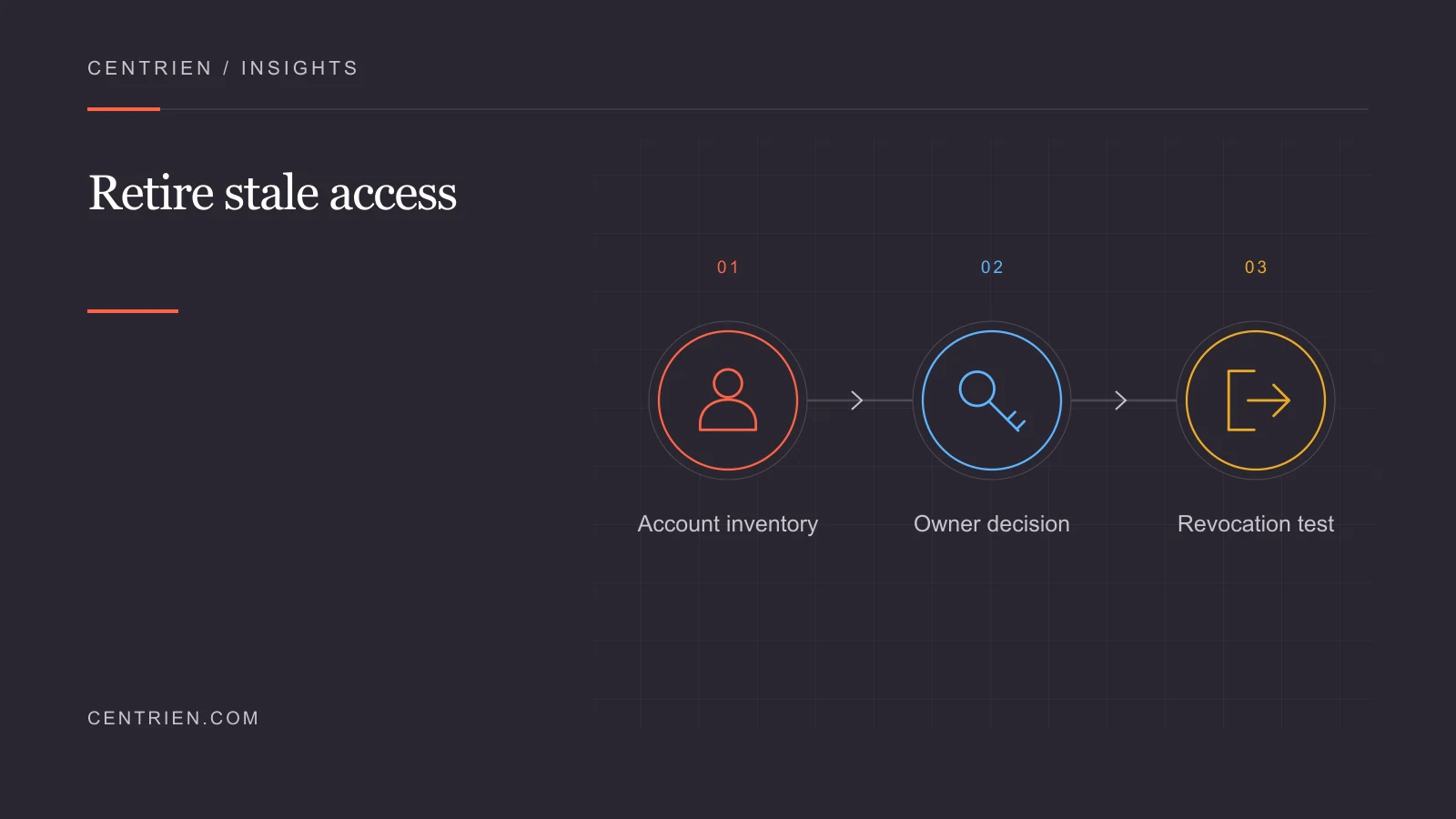
An access review needs more than a list of active employees. Supplier accounts, service identities, inherited permissions, and active sessions can preserve access after the original reason has ended.
3 min read →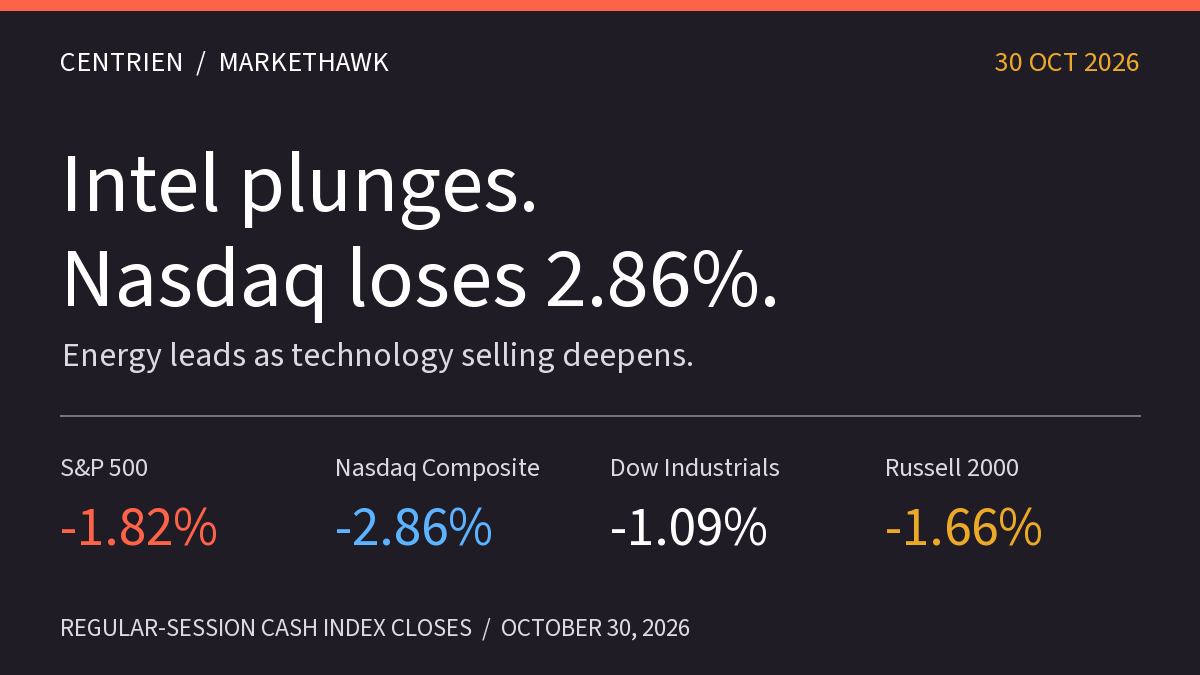
October 30 market close: Intel plunges, Nasdaq falls 2.86%
Intel falls 28.58% as its outlook weighs on technology. Nasdaq loses 2.86%, energy leads sector gains, and labor-cost data and weekly returns frame the Friday close.
4 min read →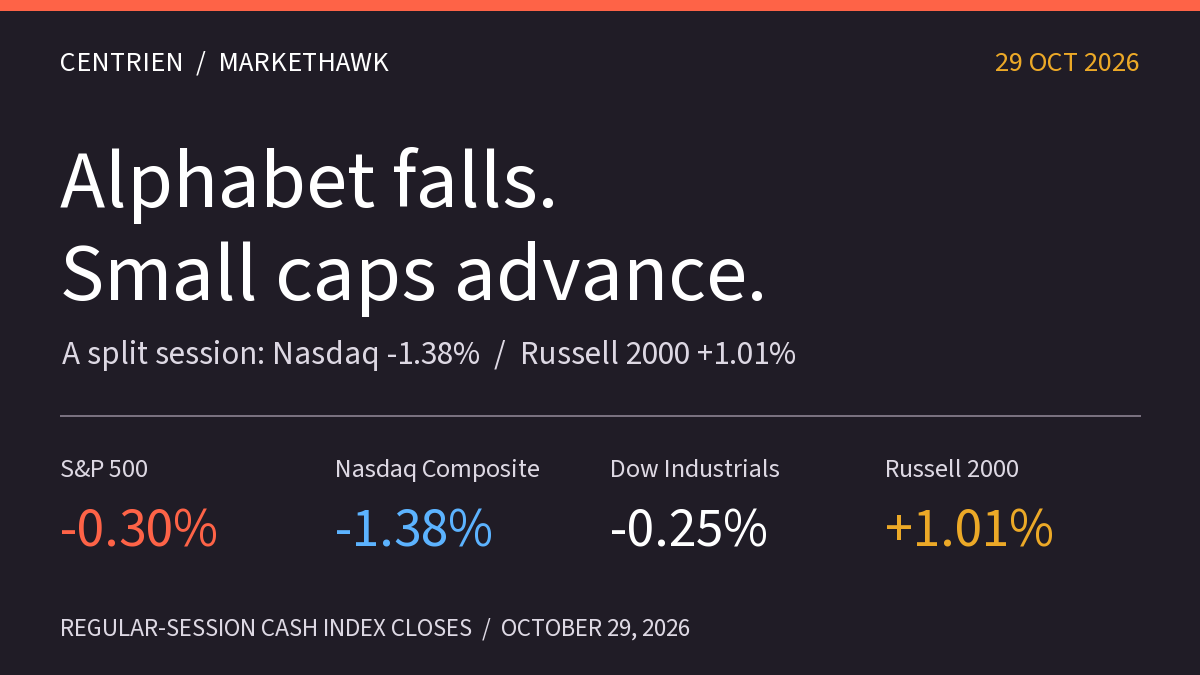
October 29 market close: Alphabet sinks, small caps advance
Alphabet falls 12.64% and the Nasdaq loses 1.38%, while small caps and nine sector ETFs gain. GDP, inflation and Amazon earnings frame a sharply divided session.
4 min read →