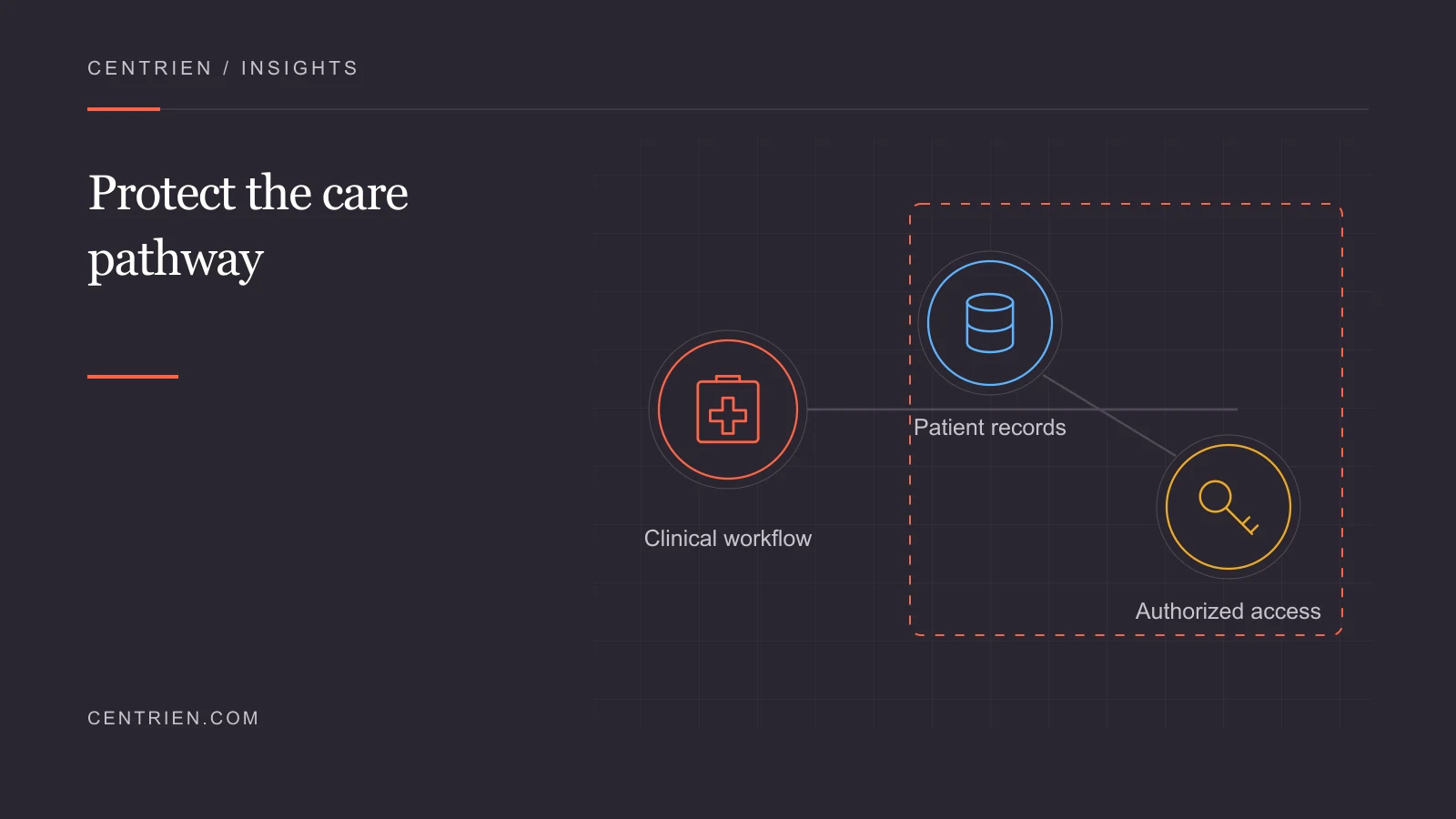
Follow the patient record through the workflow
Patient information moves through registration, care delivery, billing, support, and supplier systems. Protecting it starts with understanding those paths and the access needed at each stage.
Work with the people responsible for the clinical process to map electronic protected health information and its dependencies. Assess risks, document safeguards, and test access and recovery through approved methods that preserve care delivery. Refer questions about applicable obligations to the responsible compliance advisers.
Put it into practice
Inventory clinical systems, messaging, exports, portable devices, backups, and business associates. Verify unique access and recovery for the highest-impact workflow. Escalate regulatory interpretation to qualified privacy and legal reviewers.
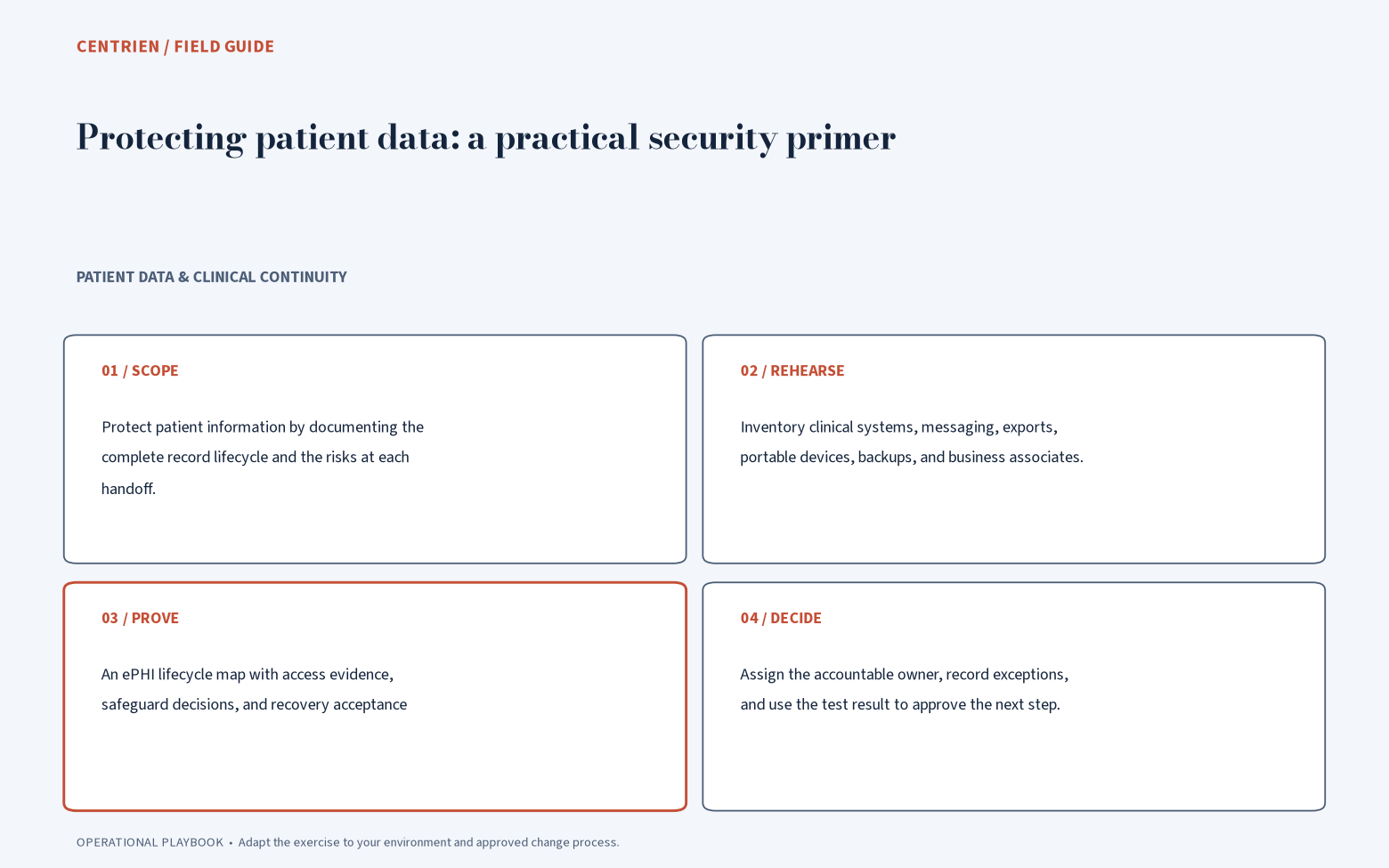
Implementation steps
- Scope the patient-data lifecycleIdentify where electronic protected health information is created, received, maintained, and transmitted. Include clinical systems, devices, exports, backups, and relevant business associates.
- Analyze specific risksDocument reasonably anticipated threats, vulnerabilities, likelihood, and consequences for the actual environment. Link safeguards and remediation decisions to those risks instead of assuming one product covers the whole obligation.
- Test practical safeguardsVerify unique access, appropriate permissions, managed devices, logging, and recovery for a representative clinical workflow. Review encryption and incident facts under applicable HHS guidance; avoid blanket statements about breach reporting.
- Rehearse clinical downtimeAsk clinical staff to validate an approved downtime procedure and data reconciliation after recovery. Record remaining patient-care and privacy risks and involve qualified compliance or legal reviewers where required.
Track ePHI inventory coverage and access review coverage
| Measure | Calculation or definition | How to use it |
|---|---|---|
| ePHI inventory coverage | Known ePHI locations risk-assessed / known locations | Treat newly discovered copies and interfaces as scope changes. |
| Access review coverage | Clinical access decisions verified / access decisions in scope | Track shared or emergency routes as explicit exceptions. |
| Downtime readiness | Critical workflows with accepted downtime tests / critical workflows | A technical restore without clinical acceptance remains incomplete. |
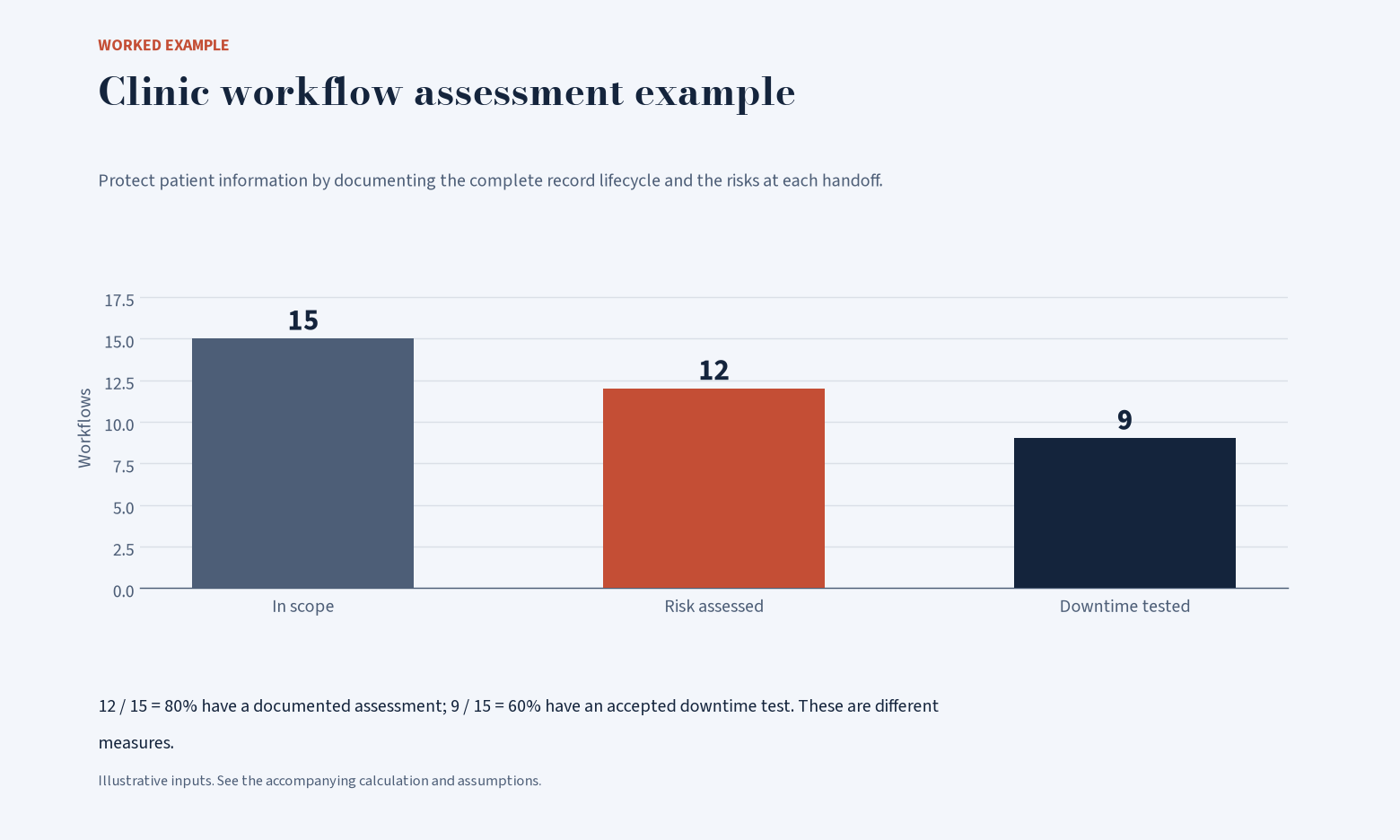
Clinic workflow assessment example
Worked example. Figures are illustrative.
| Observation | Workflows |
|---|---|
| In scope | 15 |
| Risk assessed | 12 |
| Downtime tested | 9 |
Track risk assessment coverage and downtime readiness as separate measures.
The record to keep
The deliverable: An ePHI lifecycle map with access evidence, safeguard decisions, and recovery acceptance.
Select one record path and check the handoffs with its clinical and technical owners. Keep unresolved access or recovery gaps in the risk plan until the corrective work has been verified.
References
- HHS: Guidance on Risk Analysis — Scope the electronic protected health information and document risks and safeguards. Apply the requirements relevant to the organization.
- NIST SP 800-34 Rev. 1: Contingency Planning — Use impact analysis, recovery priorities, exercises, and plan maintenance to structure continuity work.
Keep reading.
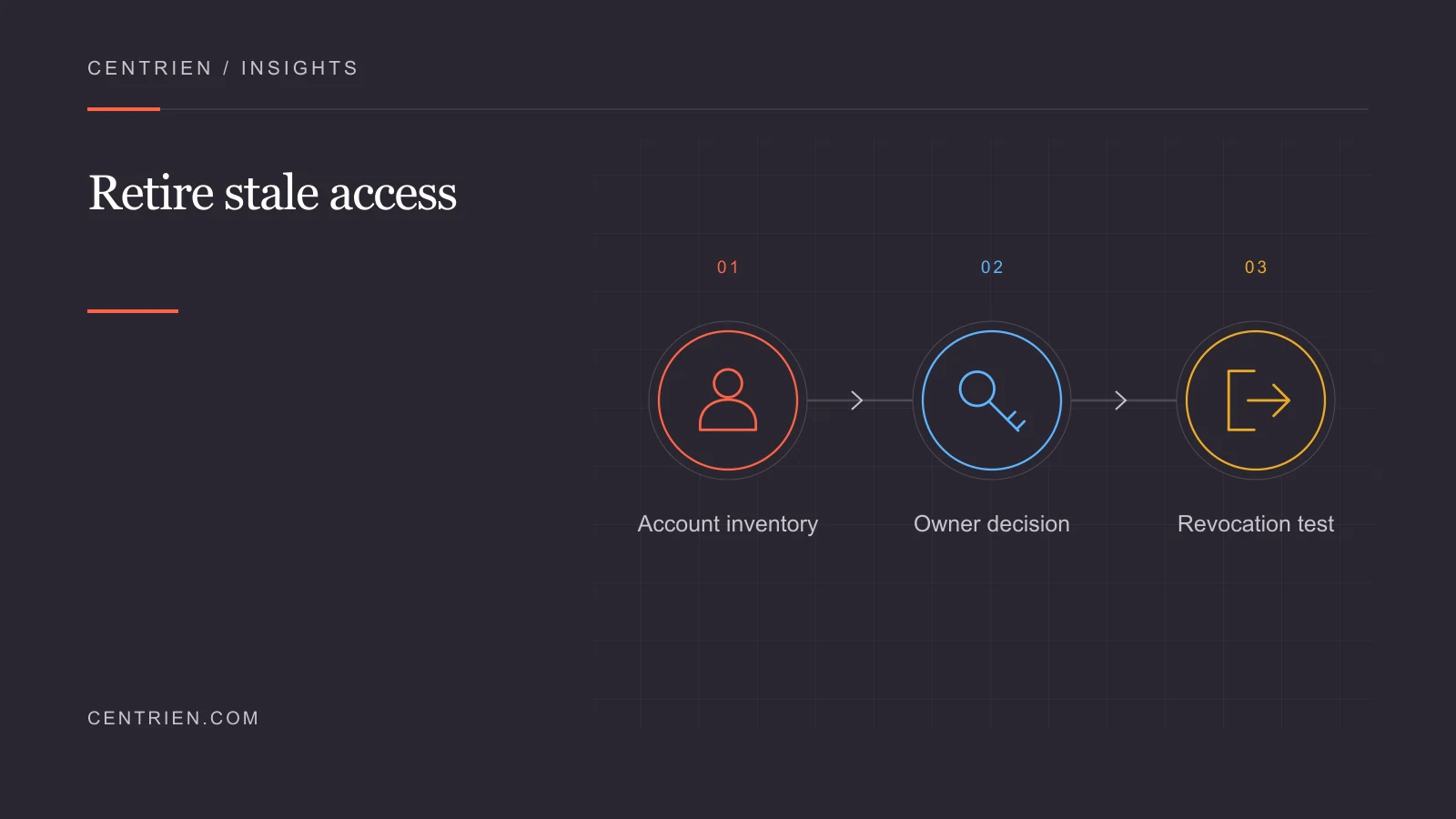
Your Access List Is a Museum. Time to Clean It Out.
An access review needs more than a list of active employees. Supplier accounts, service identities, inherited permissions, and active sessions can preserve access after the original reason has ended.
3 min read →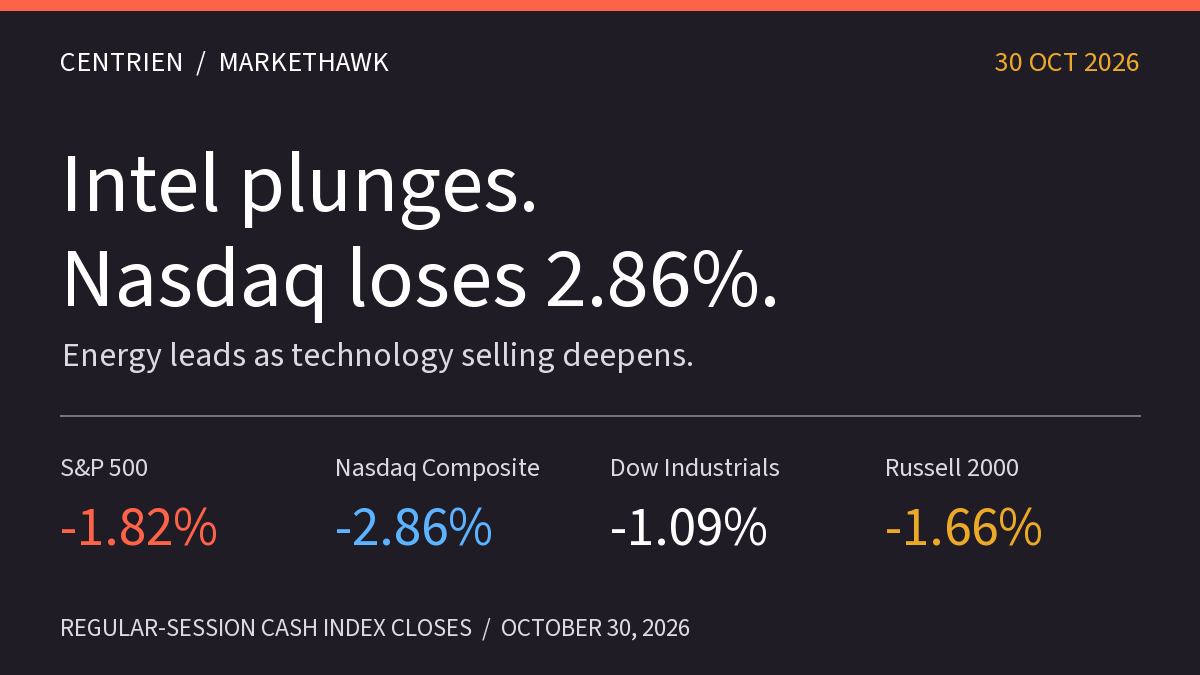
October 30 market close: Intel plunges, Nasdaq falls 2.86%
Intel falls 28.58% as its outlook weighs on technology. Nasdaq loses 2.86%, energy leads sector gains, and labor-cost data and weekly returns frame the Friday close.
4 min read →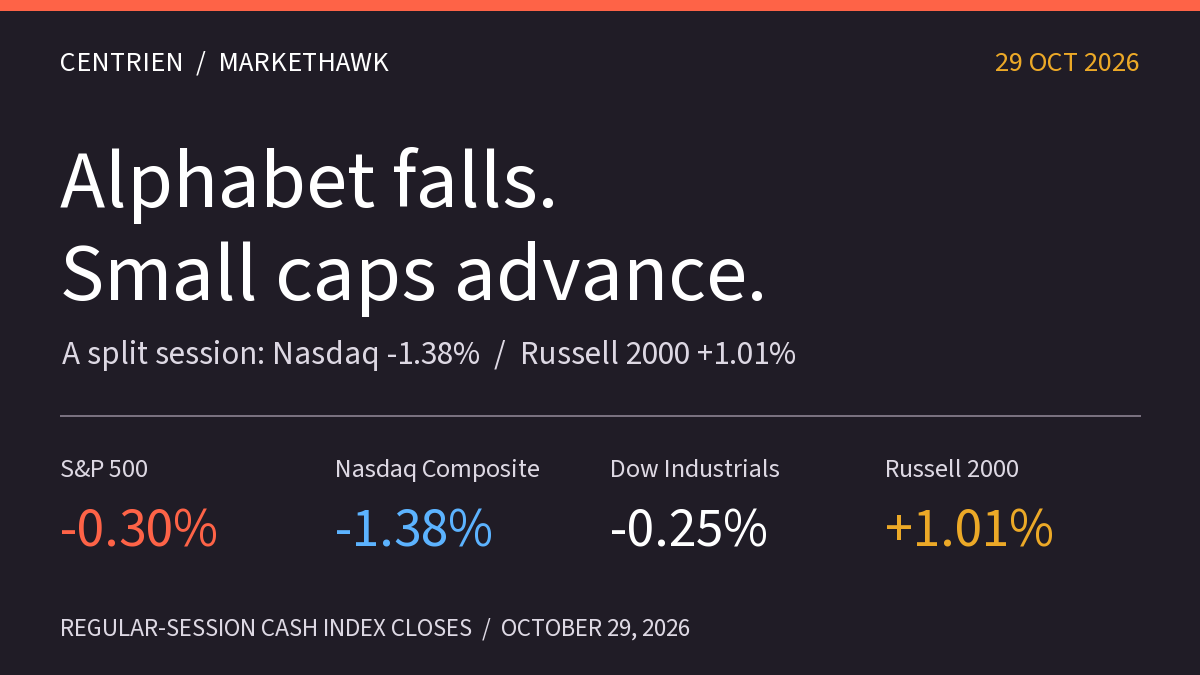
October 29 market close: Alphabet sinks, small caps advance
Alphabet falls 12.64% and the Nasdaq loses 1.38%, while small caps and nine sector ETFs gain. GDP, inflation and Amazon earnings frame a sharply divided session.
4 min read →