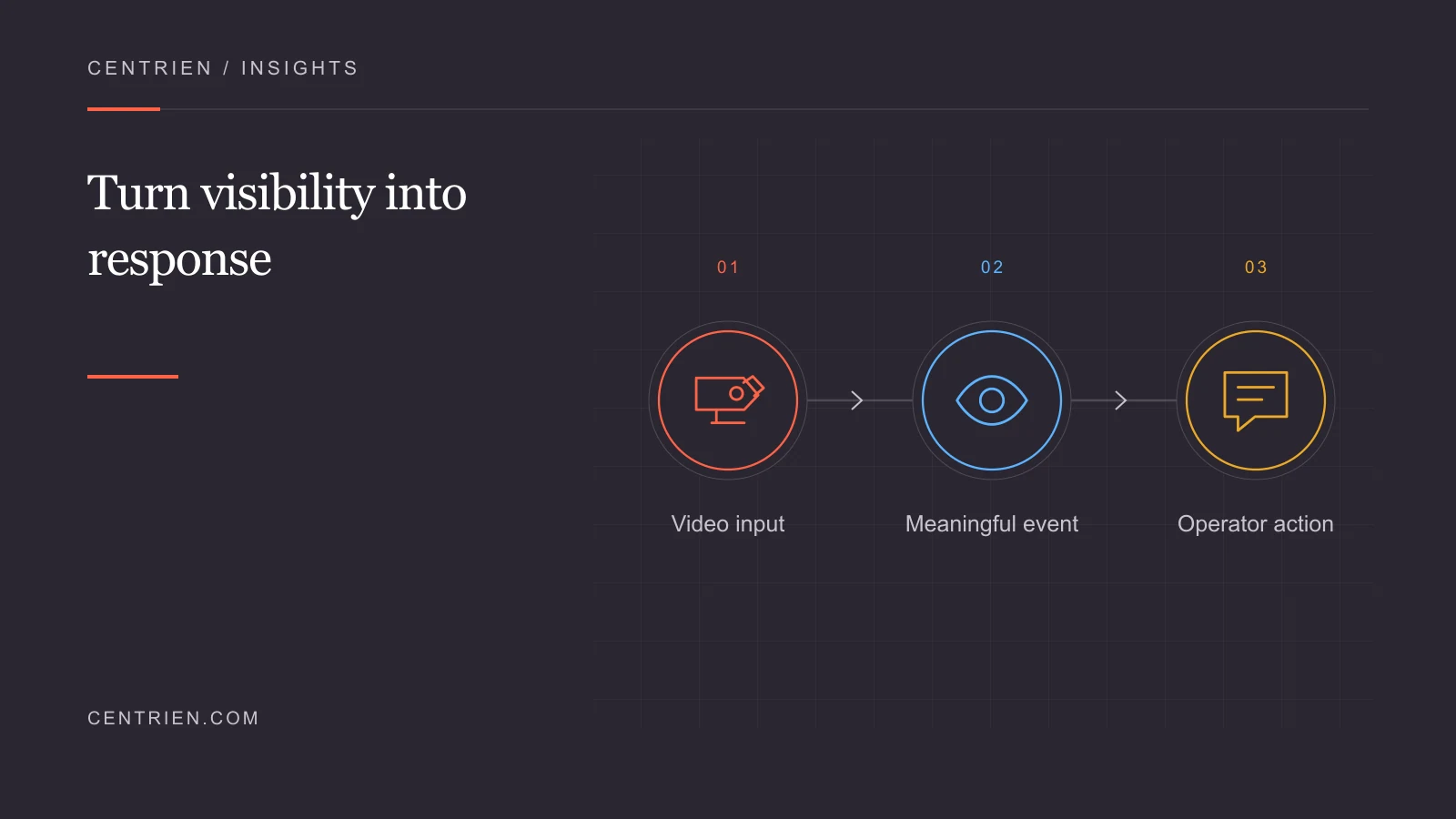
Specify the event the camera must recognize
A video analytics proposal should name the event it is intended to detect and the response that follows. A count, an unusual movement, and an intrusion alert require different tests and different privacy decisions.
Use representative lighting, camera positions, and operating conditions. Measure false alarms and missed events for the intended task, then test whether an alert reaches someone who can respond. Restrict footage access and retention to the approved purpose.
Put it into practice
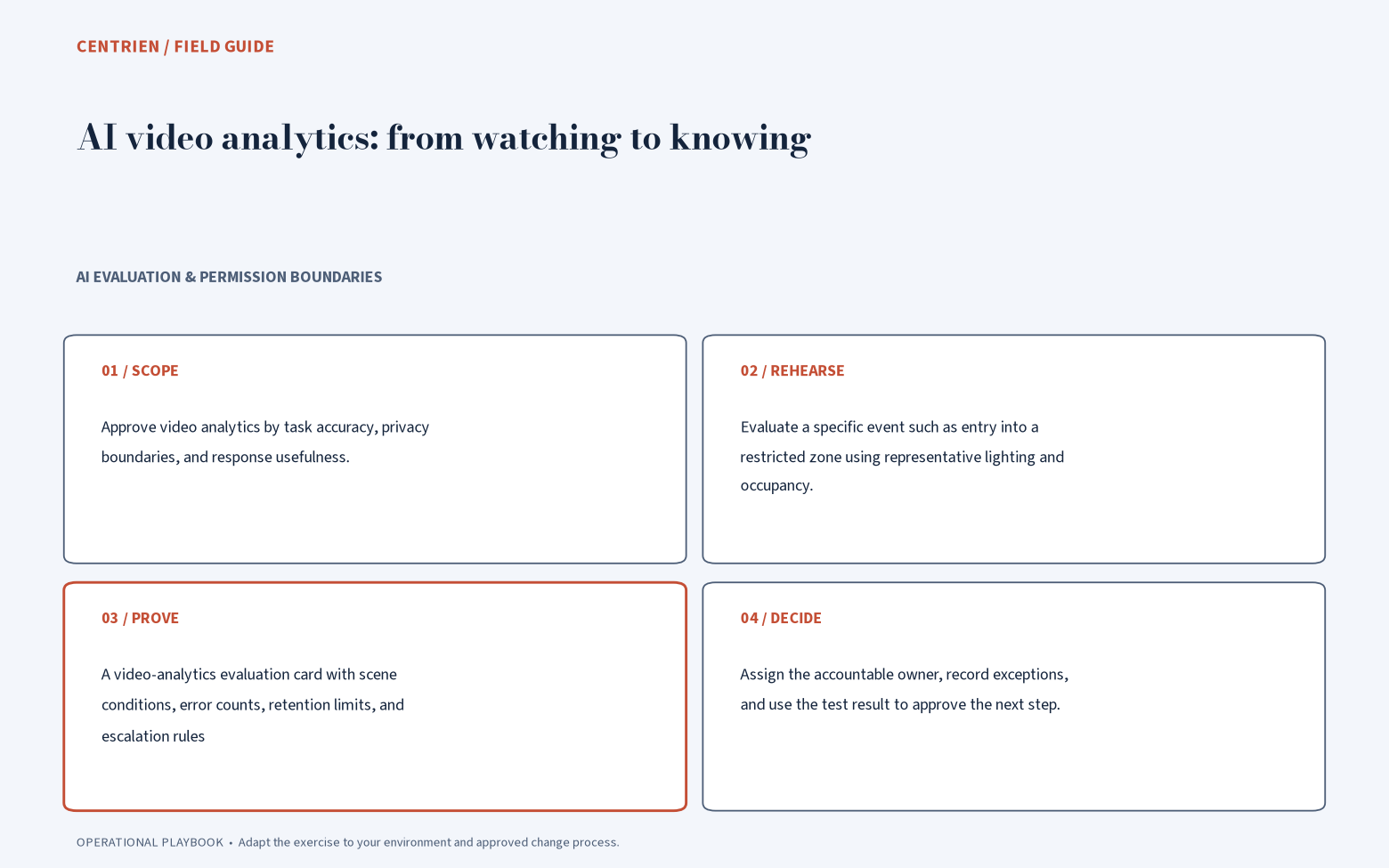
Evaluate a specific event such as entry into a restricted zone using representative lighting and occupancy. Record false alarms and missed events, determine who may view footage, and require an operator to verify consequential decisions.
Implementation steps
- Bound the use caseSpecify the task, authorized data, model and retrieval dependencies, tools, external destinations, and consequences of an incorrect answer. Identify the human or service accountable for each consequential action.
- Build a useful evaluationInclude representative successful tasks, missing evidence, ambiguous requests, adversarial content, and prohibited actions. Compare with the existing workflow and record failure categories as well as aggregate accuracy.
- Enforce outside the modelLimit credentials and tool permissions at the service boundary. Require independent authorization for consequential operations, validate output before downstream use, and log the actual tool outcome instead of trusting an assistant’s narration.
- Operate the release gateDefine what would stop the pilot, how to disable access, and how to return to the previous workflow. Re-evaluate after material model, prompt, retrieval, tool, or data changes and keep reviewable evidence.
Track task acceptance rate and boundary-test pass rate
| Measure | Calculation or definition | How to use it |
|---|---|---|
| Task acceptance rate | Tasks meeting defined acceptance criteria / representative tasks tested | Show error categories and sample composition. |
| Boundary-test pass rate | Prohibited actions blocked / prohibited action tests | A small passing suite does not prove universal resistance. |
| Human review load | Cases requiring substantive review / cases processed | Include reviewer time and downstream correction effort. |
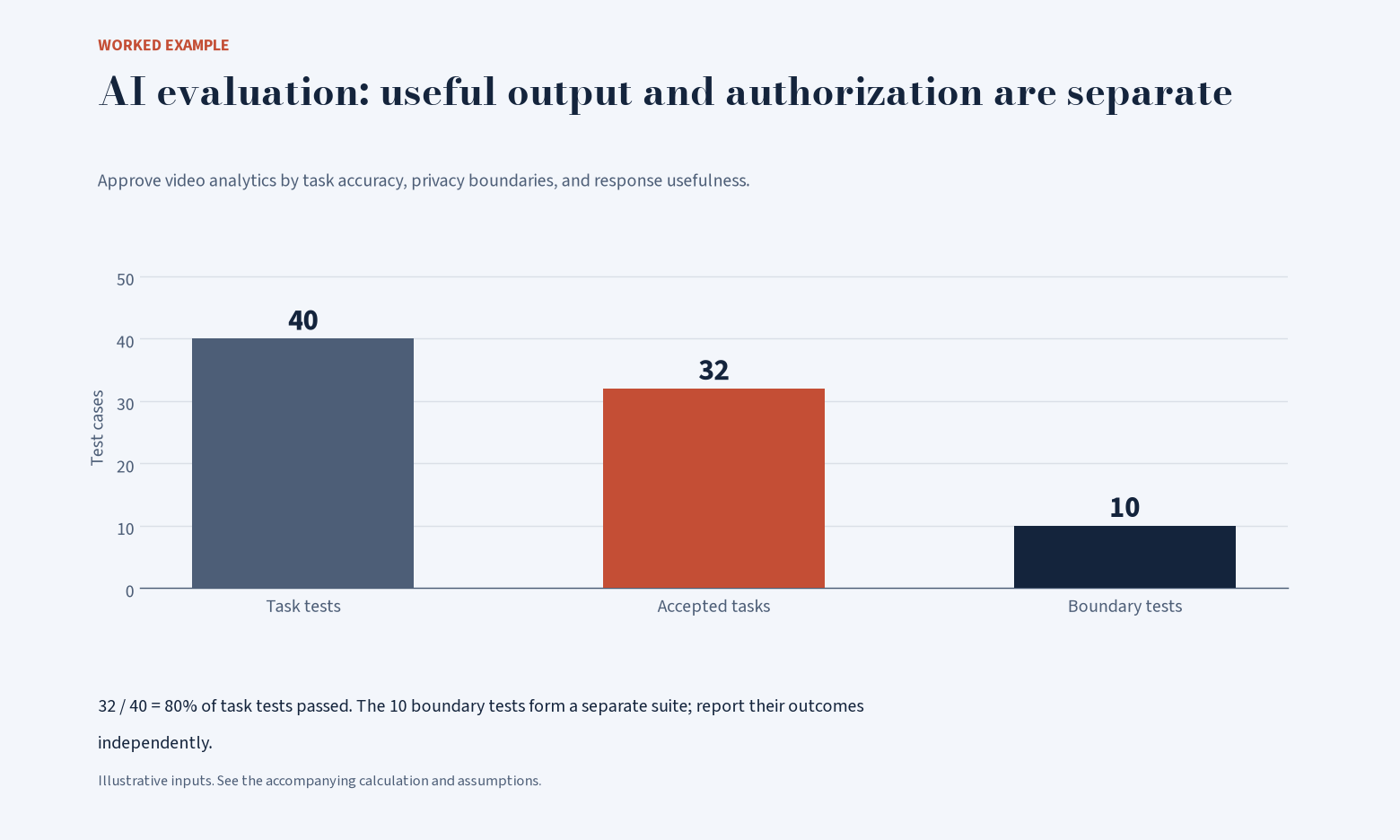
AI evaluation: useful output and authorization are separate
Worked example. Figures are illustrative.
| Observation | Test cases |
|---|---|
| Task tests | 40 |
| Accepted tasks | 32 |
| Boundary tests | 10 |
The third bar is a test count, not a passed result. Quality acceptance cannot substitute for verified authorization enforcement.
The record to keep
The deliverable: A video-analytics evaluation card with scene conditions, error counts, retention limits, and escalation rules.
Accept the system against observed task performance at the site. A convincing demonstration clip should lead to a controlled trial with clear response and privacy requirements.
References
- NIST AI Risk Management Framework — Use lifecycle governance and evaluation appropriate to the proposed AI use case.
- OWASP: LLM Prompt Injection Prevention — Layer input handling, least privilege, output checks, and independent controls over consequential tool actions.
Keep reading.
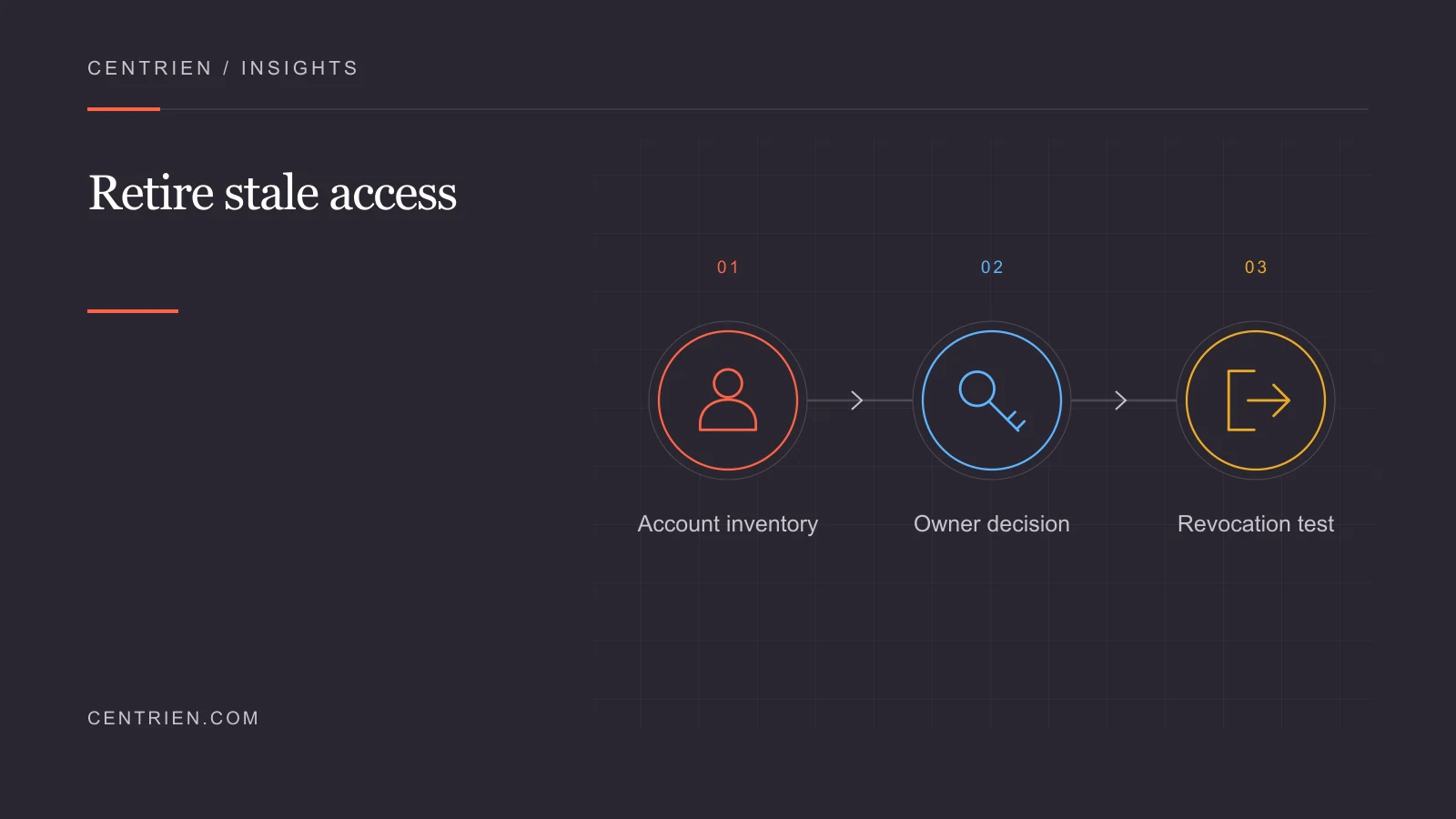
Your Access List Is a Museum. Time to Clean It Out.
An access review needs more than a list of active employees. Supplier accounts, service identities, inherited permissions, and active sessions can preserve access after the original reason has ended.
3 min read →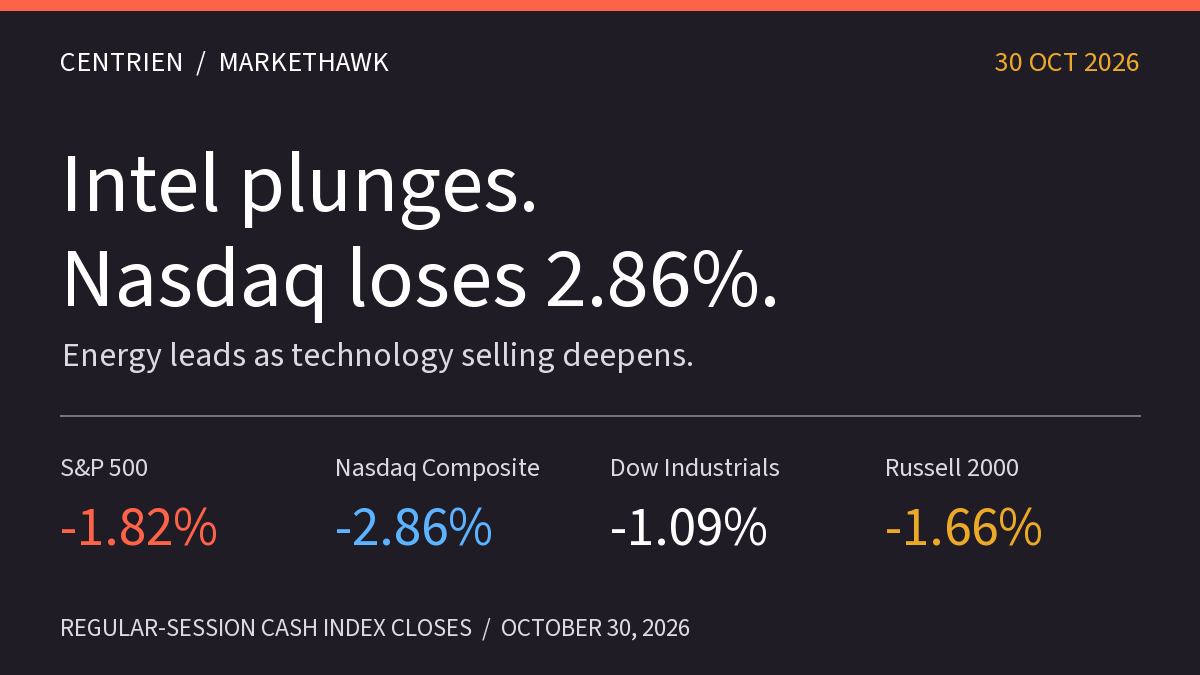
October 30 market close: Intel plunges, Nasdaq falls 2.86%
Intel falls 28.58% as its outlook weighs on technology. Nasdaq loses 2.86%, energy leads sector gains, and labor-cost data and weekly returns frame the Friday close.
4 min read →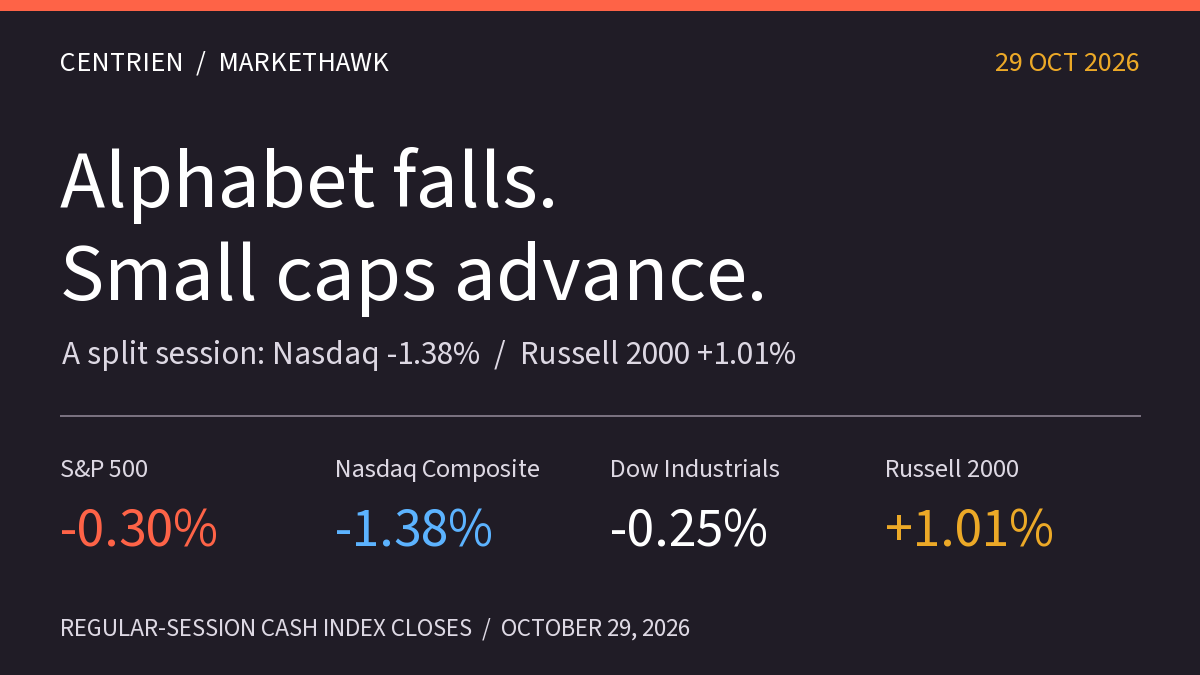
October 29 market close: Alphabet sinks, small caps advance
Alphabet falls 12.64% and the Nasdaq loses 1.38%, while small caps and nine sector ETFs gain. GDP, inflation and Amazon earnings frame a sharply divided session.
4 min read →