An alert is useful only if someone can act
A refrigeration sensor may reveal a change in temperature or equipment behavior. Predictive maintenance adds value when that observation leads to a justified inspection or repair with enough time to matter.
Define the failure mode, available measurements, and response owner before evaluating a model. Record missed failures and unnecessary callouts alongside successful alerts. Keep established safety controls and product-disposition procedures in place while the proposed method is tested.
Put it into practice
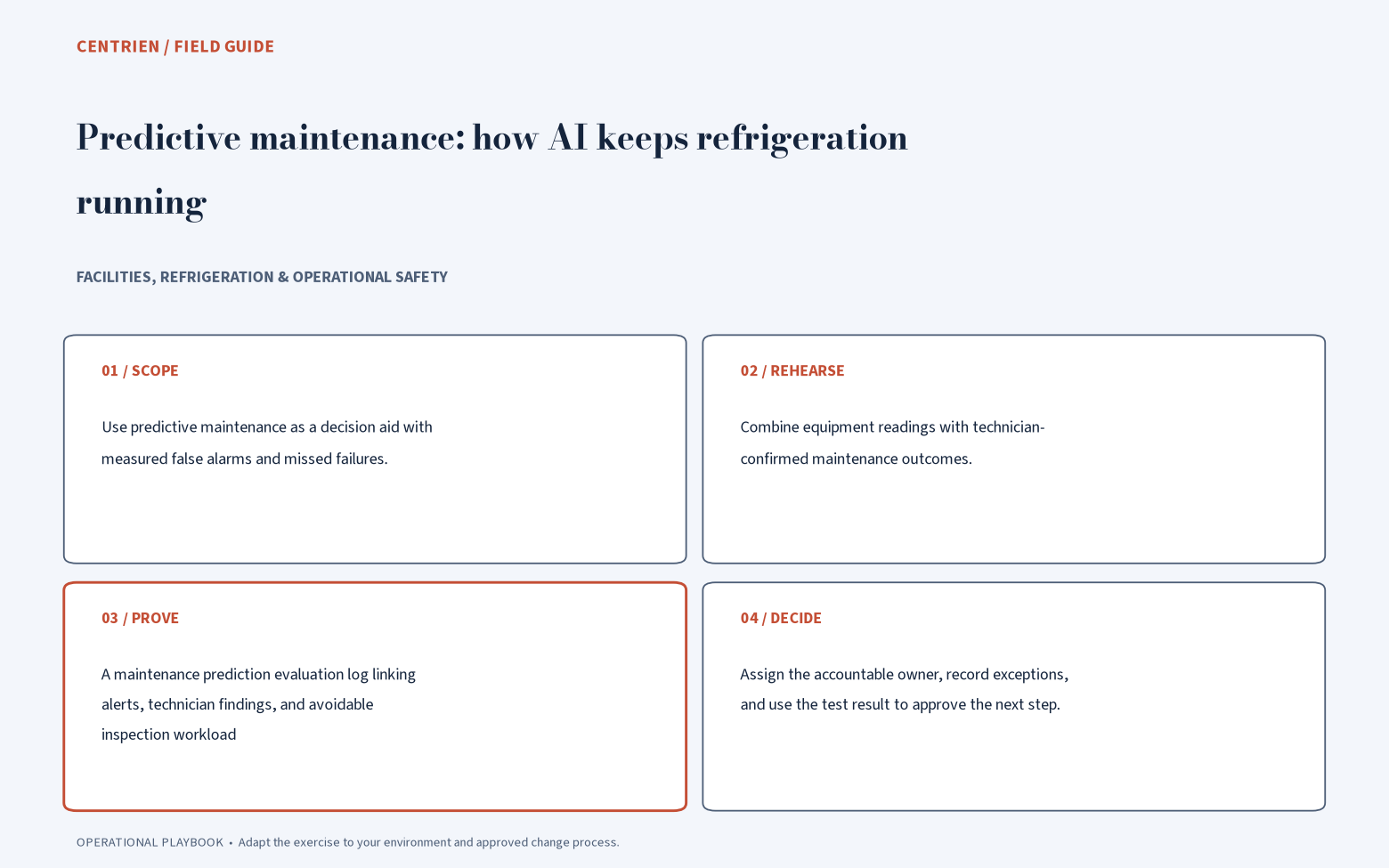
Combine equipment readings with technician-confirmed maintenance outcomes. Compare the model with a simple threshold rule on a later time period. Track whether an alert led to useful work, and keep safety trips independent of the predictive system.
Implementation steps
- Establish equipment contextRecord asset identity, operating purpose, manufacturer instructions, service history, sensor condition, and safety or product constraints. Use the relevant professional to set equipment-specific limits.
- Measure comparable conditionsRetain timestamped readings and the conditions that influence them: ambient temperature, occupancy, loading, door openings, operating hours, or defrost state. Check sensor calibration and missing data before diagnosing a trend.
- Test the response pathValidate alarm persistence, delivery, acknowledgement, dispatch, and fallback operation through a supervised exercise. Keep safety functions independent and route electrical, combustion, and refrigerant work to qualified personnel.
- Verify the interventionCompare operation after the maintenance action under similar conditions. Record technician findings and any measurement limitations. Have the responsible authority decide product disposition or safety acceptance where applicable.
Track maintenance verification and alarm-to-action time
| Measure | Calculation or definition | How to use it |
|---|---|---|
| Maintenance verification | Required tasks with recorded inspection or test / tasks due | Use manufacturer and site-specific instructions for task scope. |
| Alarm-to-action time | Qualified response timestamp minus verified alarm start | Separate acknowledgement from an effective intervention. |
| Normalized energy use | Energy consumed / comparable operating exposure | Adjust for conditions before attributing savings to a change. |
Illustrative equipment downtime exposure
Worked example. Figures are illustrative.
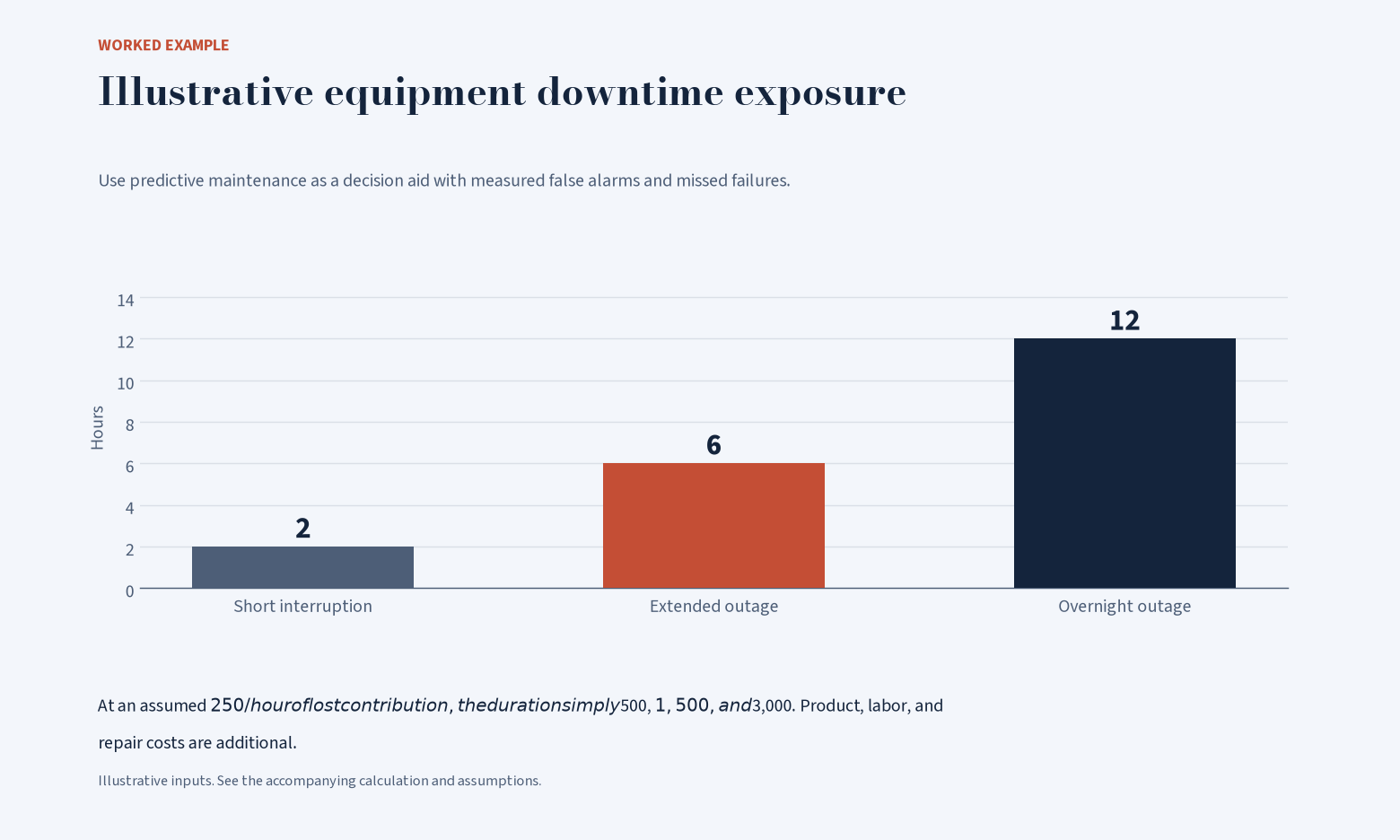
| Observation | Hours |
|---|---|
| Short interruption | 2 |
| Extended outage | 6 |
| Overnight outage | 12 |
Assess product loss, safety, and recovery costs separately from lost contribution.
The record to keep
The deliverable: A maintenance prediction evaluation log linking alerts, technician findings, and avoidable inspection workload.
Review the alert log with the technician who responds to it. Adjust thresholds and escalation against the work the alerts created, then decide whether the trial warrants wider use.
References
- U.S. Department of Energy: Operations and Maintenance Best Practices — Use systematic maintenance and measured operating conditions to investigate reliability and efficiency.
- NIST SP 800-82 Rev. 3: Operational Technology Security — Adapt security work to operational technology performance, reliability, and safety requirements.
Keep reading.
Your Access List Is a Museum. Time to Clean It Out.
An access review needs more than a list of active employees. Supplier accounts, service identities, inherited permissions, and active sessions can preserve access after the original reason has ended.
3 min read →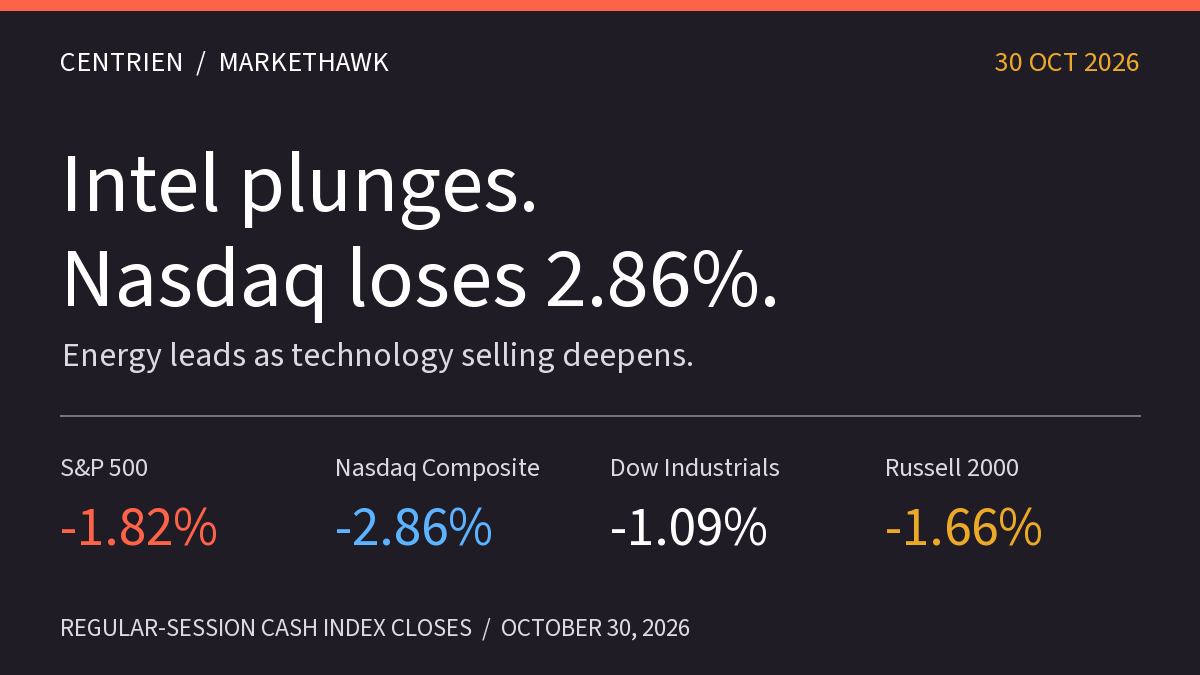
October 30 market close: Intel plunges, Nasdaq falls 2.86%
Intel falls 28.58% as its outlook weighs on technology. Nasdaq loses 2.86%, energy leads sector gains, and labor-cost data and weekly returns frame the Friday close.
4 min read →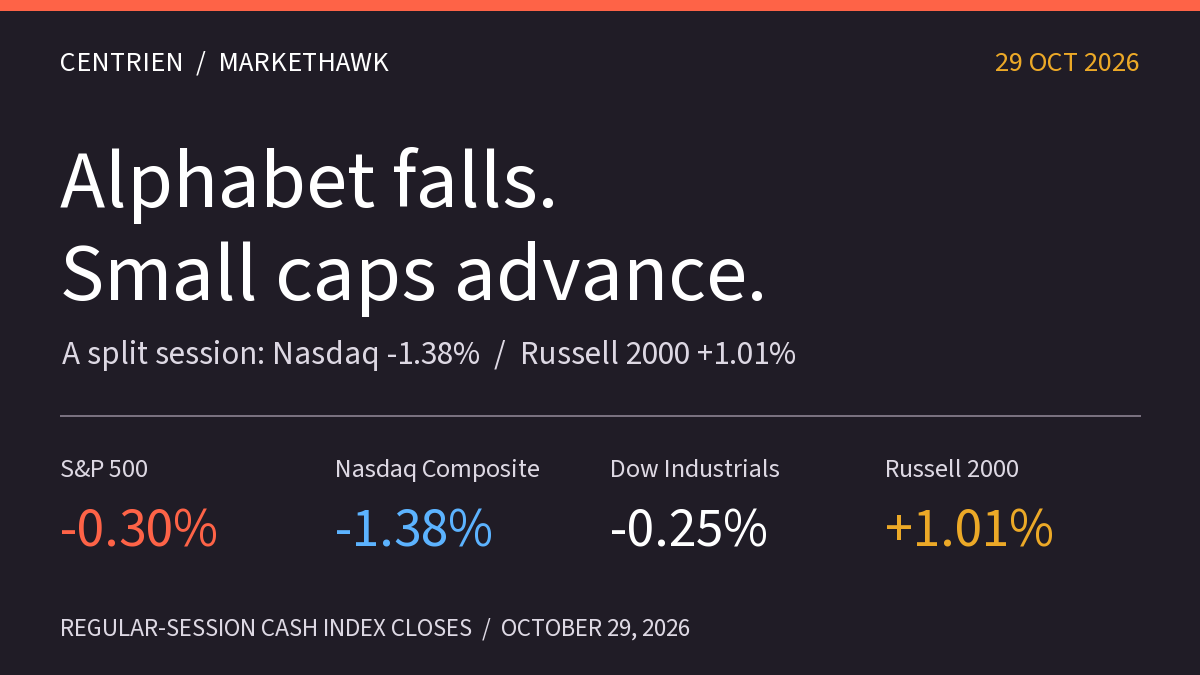
October 29 market close: Alphabet sinks, small caps advance
Alphabet falls 12.64% and the Nasdaq loses 1.38%, while small caps and nine sector ETFs gain. GDP, inflation and Amazon earnings frame a sharply divided session.
4 min read →