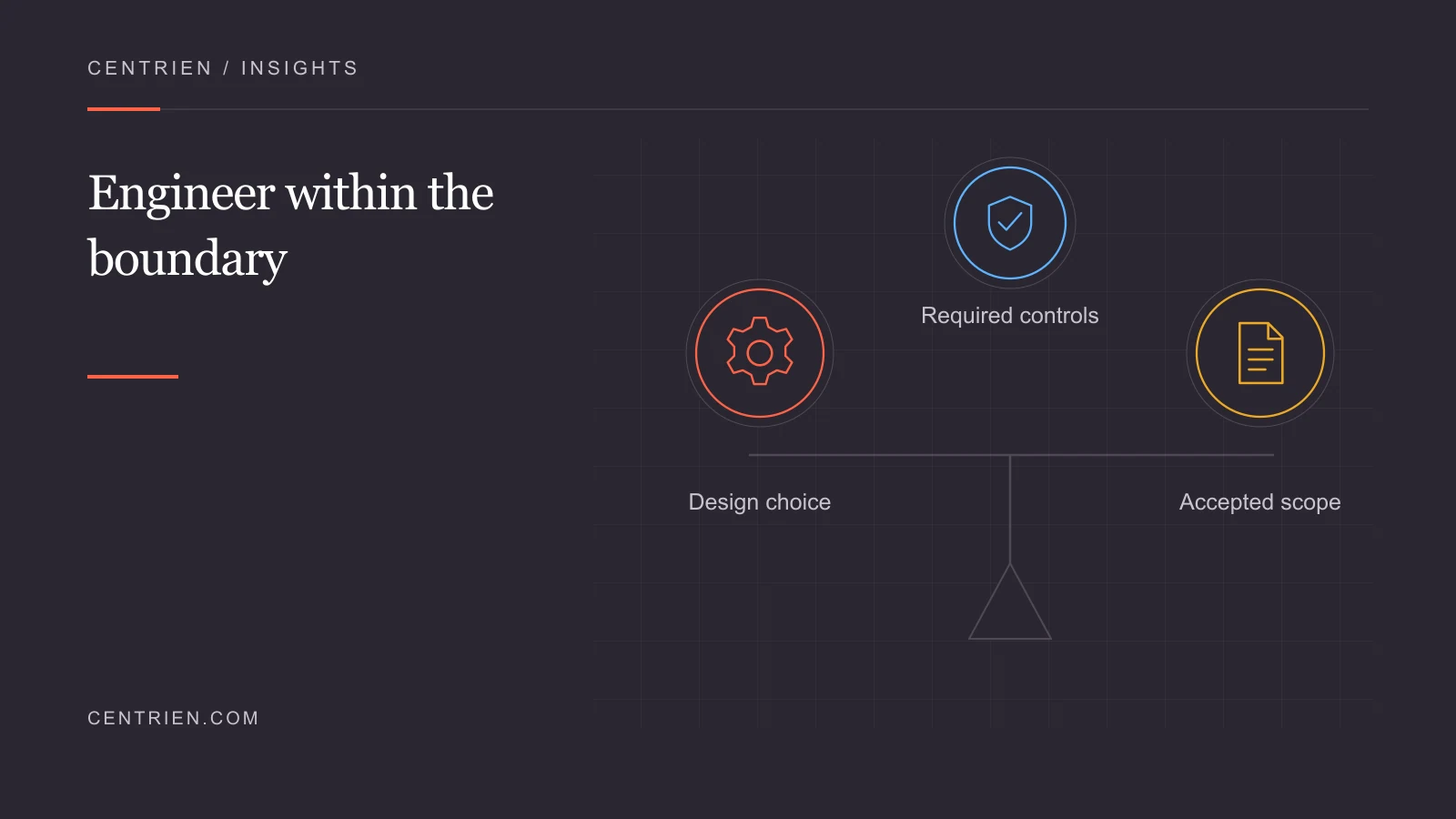
Compare the full cost of a substitution
A cheaper component or delivery method can be a sound engineering choice. The saving needs to survive installation, operation, maintenance, and eventual replacement, while the proposed design continues to meet applicable requirements.
Document the function the original specification protects before pricing alternatives. Ask the responsible technical and compliance reviewers to assess the substitution, including compatibility, support, safety, and acceptance testing. A lower purchase price does not settle those questions.
Put it into practice
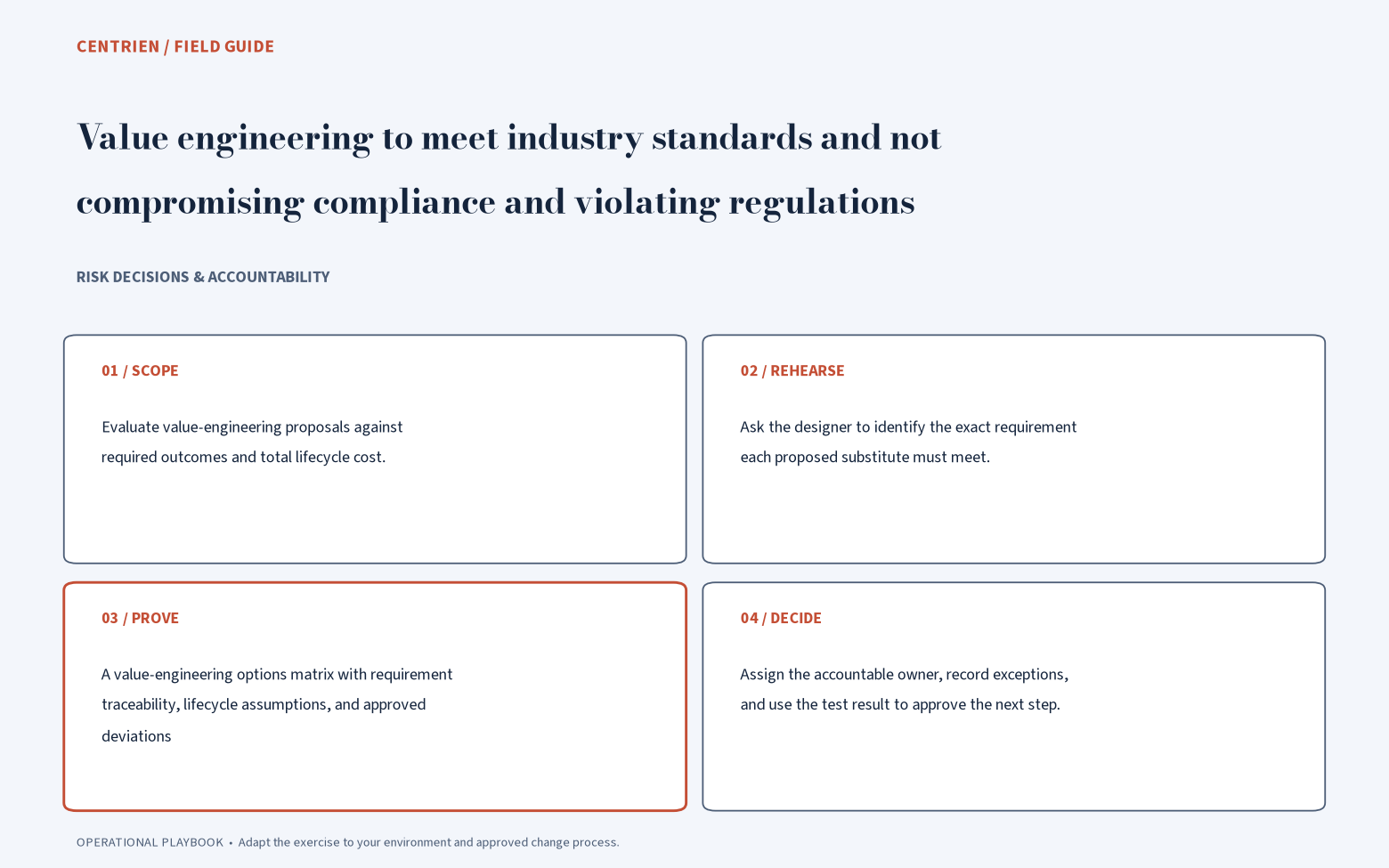
Ask the designer to identify the exact requirement each proposed substitute must meet. Compare safety, maintainability, interoperability, evidence, and future operating cost. Record who may accept a deviation and what revalidation is needed.
Implementation steps
- Trace the required function List the performance, safety, compatibility, and applicable compliance requirements protected by the original design. Identify the reviewers responsible for each.
- Compare the substitution Price installation, operation, maintenance, support, and replacement on the same time basis. Show assumptions and any requirement that still needs validation.
- Test before approval Use the agreed technical acceptance method and obtain the required reviews. Keep approved deviations and test results with the final specification.
Track decision coverage and treatment timeliness
| Measure | Calculation or definition | How to use it |
|---|---|---|
| Decision coverage | Decisions with an accountable approver / material decisions in scope | Investigate unowned decisions before adding more reporting. |
| Treatment timeliness | Actions completed by agreed date / actions due in the period | Show overdue dependencies and accepted exceptions separately. |
| Evidence coverage | Treatments independently verified / treatments reported complete | Keep unverified completion visible until a reviewer can reproduce it. |
Evidence-backed decisions
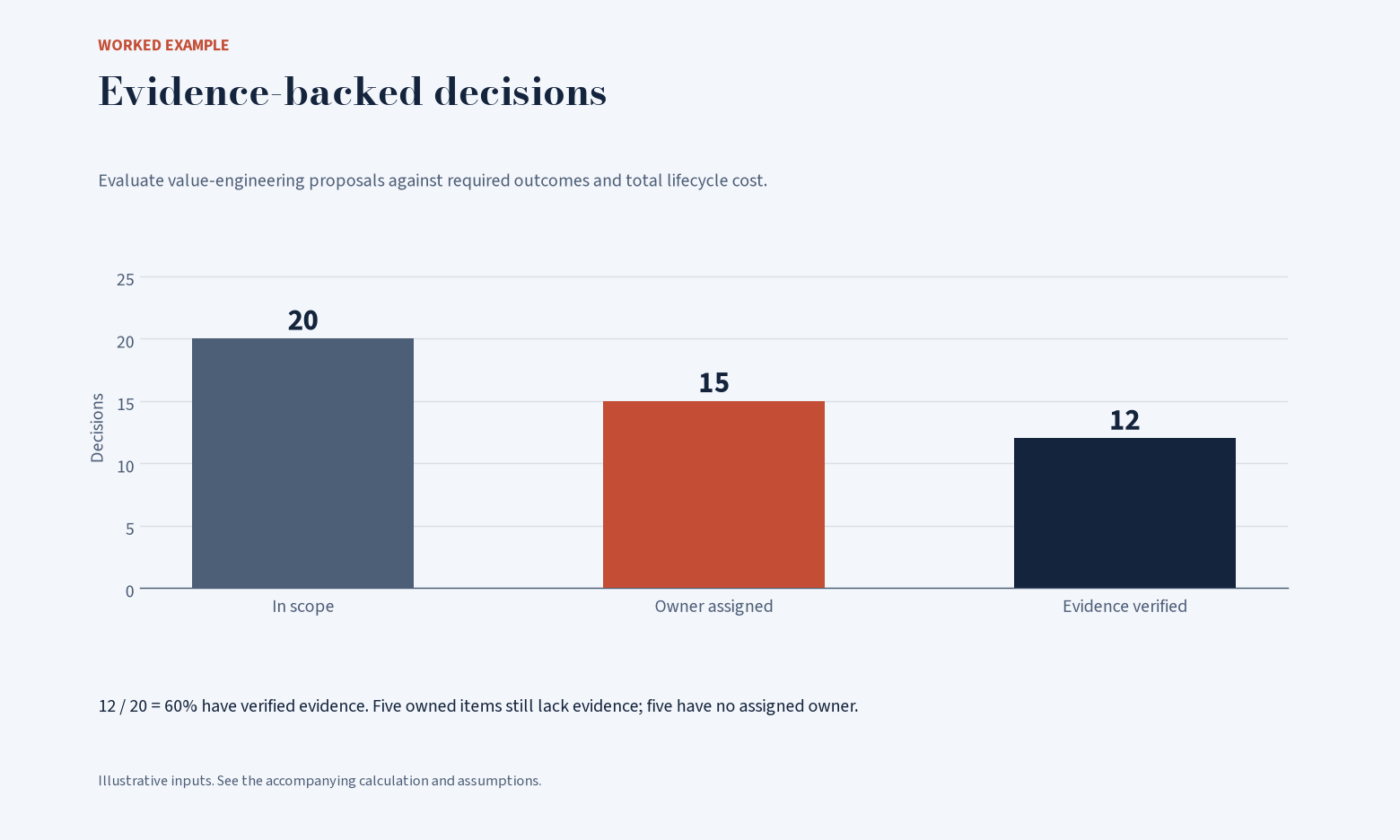
Worked example. Figures are illustrative.
| Observation | Decisions |
|---|---|
| In scope | 20 |
| Owner assigned | 15 |
| Evidence verified | 12 |
The denominator is all material decisions in this example, not only the items the team finished.
The record to keep
The deliverable: A value-engineering options matrix with requirement traceability, lifecycle assumptions, and approved deviations.
Present the substitution with its assumptions and test results beside the original design. Approve it only when the responsible reviewers can explain the tradeoff and the requirements it still meets.
References
- NIST Cybersecurity Framework — Use outcomes and organizational context to organize the risk discussion; a framework mapping is not a control test.
- NIST SP 800-61 Rev. 3: Incident Response — Connect preparation, detection, response, and recovery with the wider risk-management program.
Keep reading.
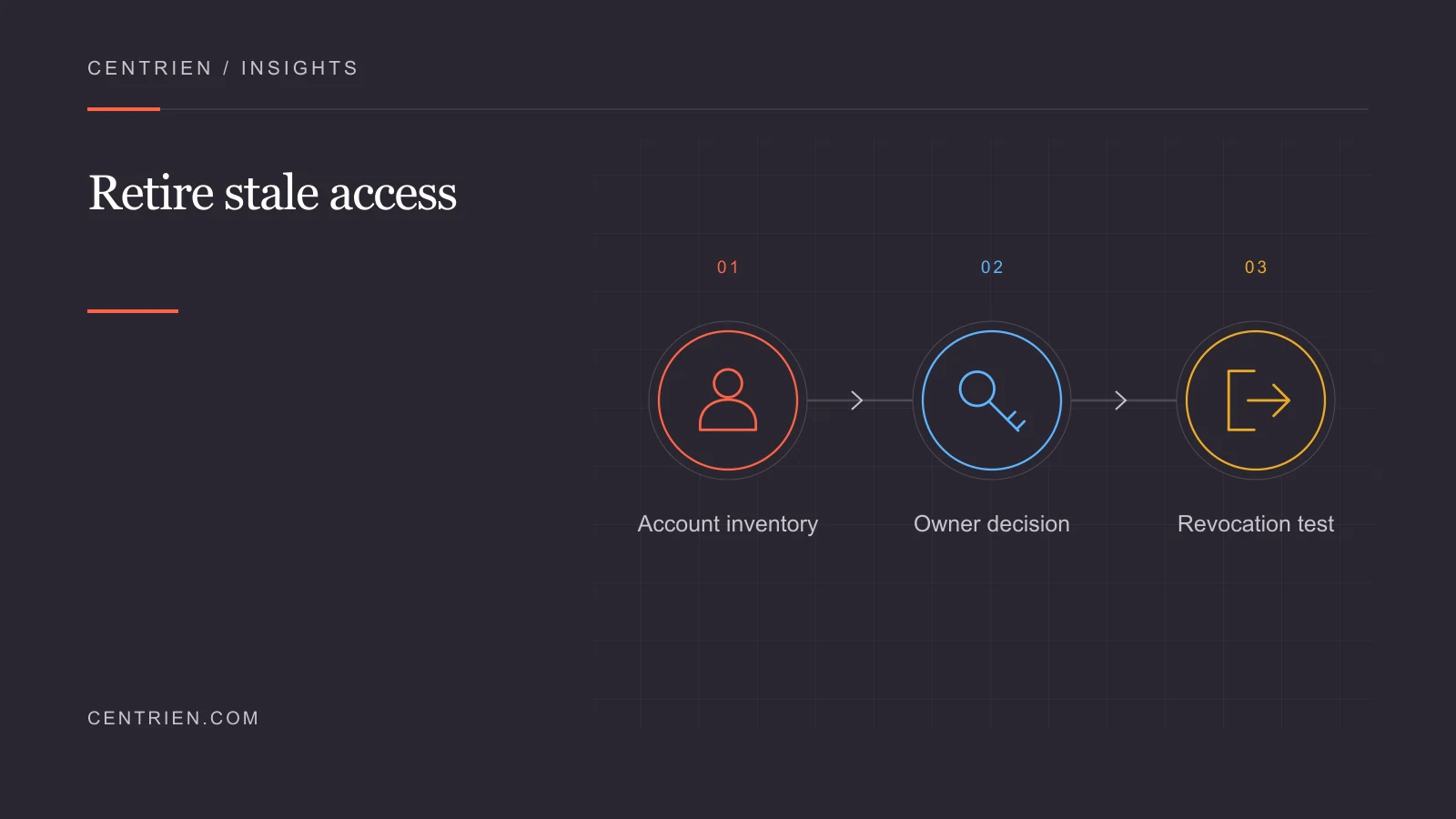
Your Access List Is a Museum. Time to Clean It Out.
An access review needs more than a list of active employees. Supplier accounts, service identities, inherited permissions, and active sessions can preserve access after the original reason has ended.
3 min read →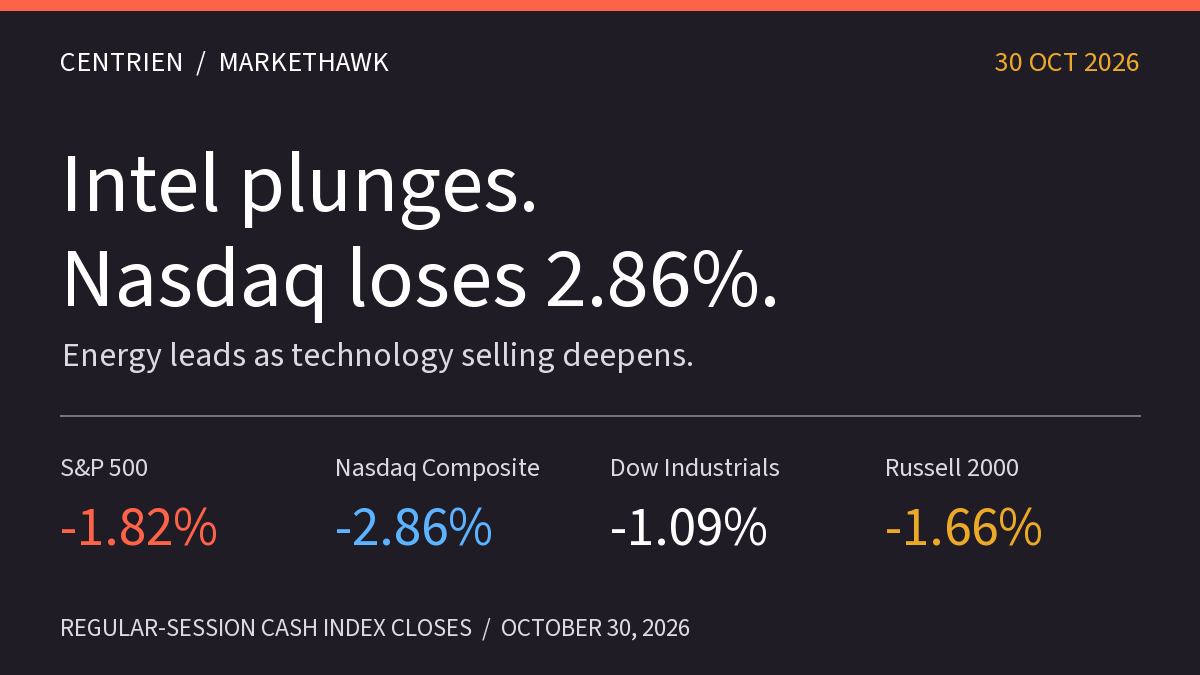
October 30 market close: Intel plunges, Nasdaq falls 2.86%
Intel falls 28.58% as its outlook weighs on technology. Nasdaq loses 2.86%, energy leads sector gains, and labor-cost data and weekly returns frame the Friday close.
4 min read →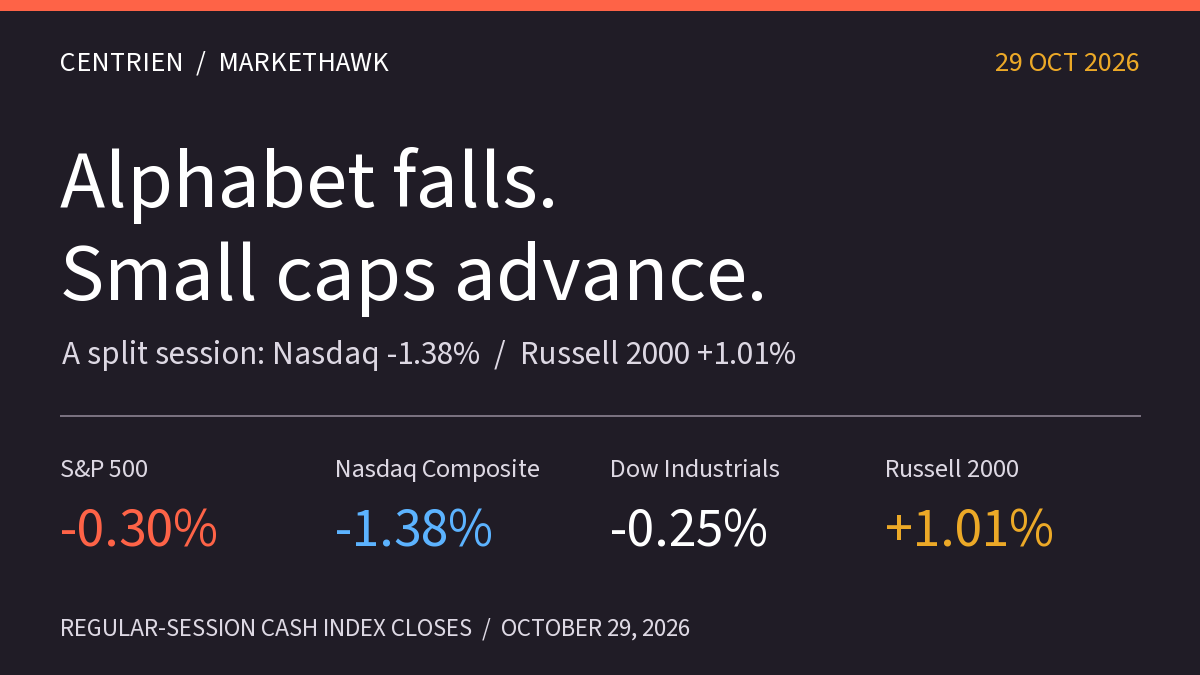
October 29 market close: Alphabet sinks, small caps advance
Alphabet falls 12.64% and the Nasdaq loses 1.38%, while small caps and nine sector ETFs gain. GDP, inflation and Amazon earnings frame a sharply divided session.
4 min read →