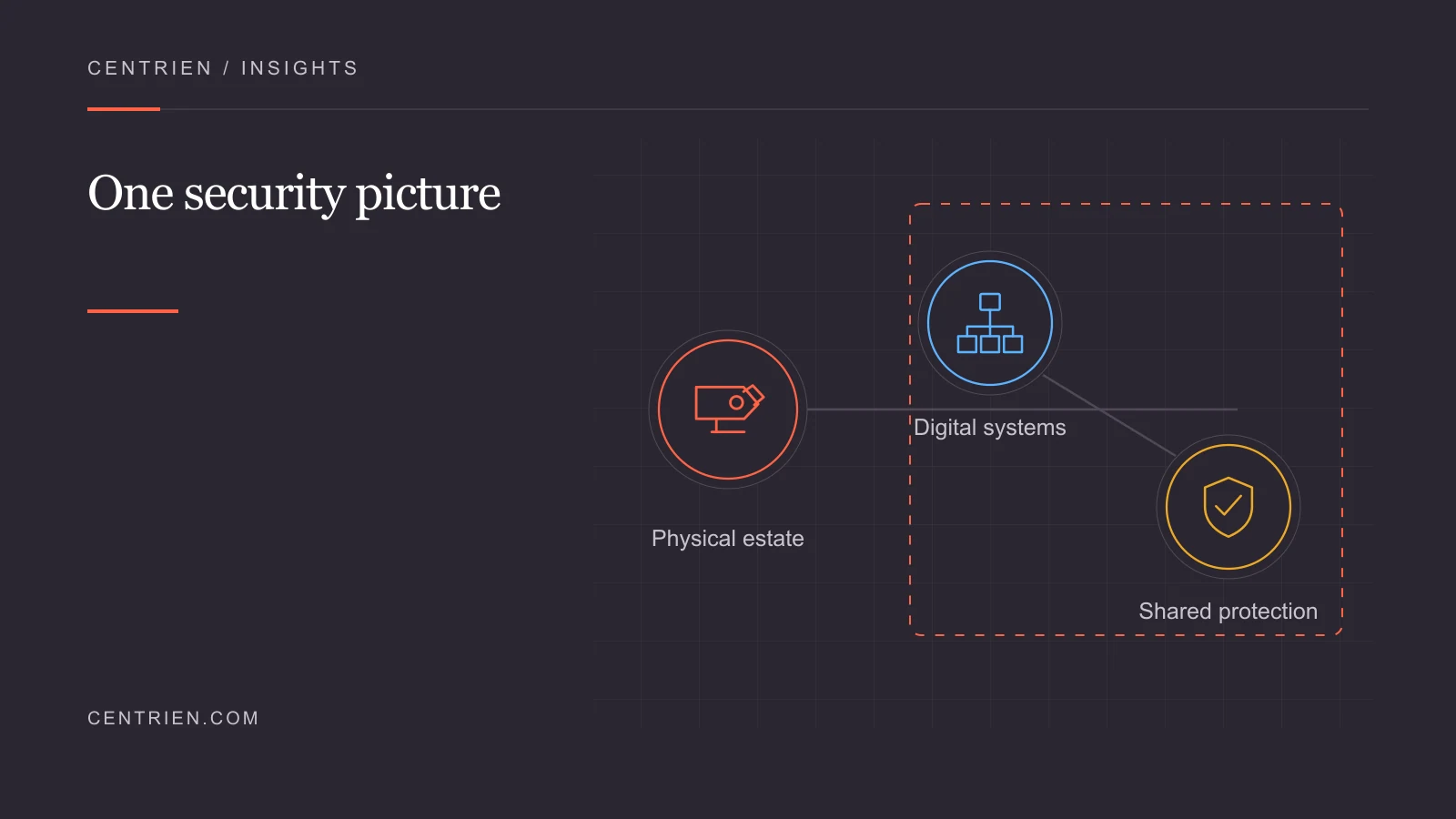
One incident can cross two teams
A door controller or network camera depends on power, connectivity, accounts, and software. When it stops working or behaves unexpectedly, the physical security and IT teams may each hold only part of the explanation.
Map the shared dependencies and define who leads common incidents. Keep administrative access restricted and preserve a workable fallback for site operations. Correlating events can help diagnosis, but it does not require giving every team unrestricted access to every system or recording.
Put it into practice
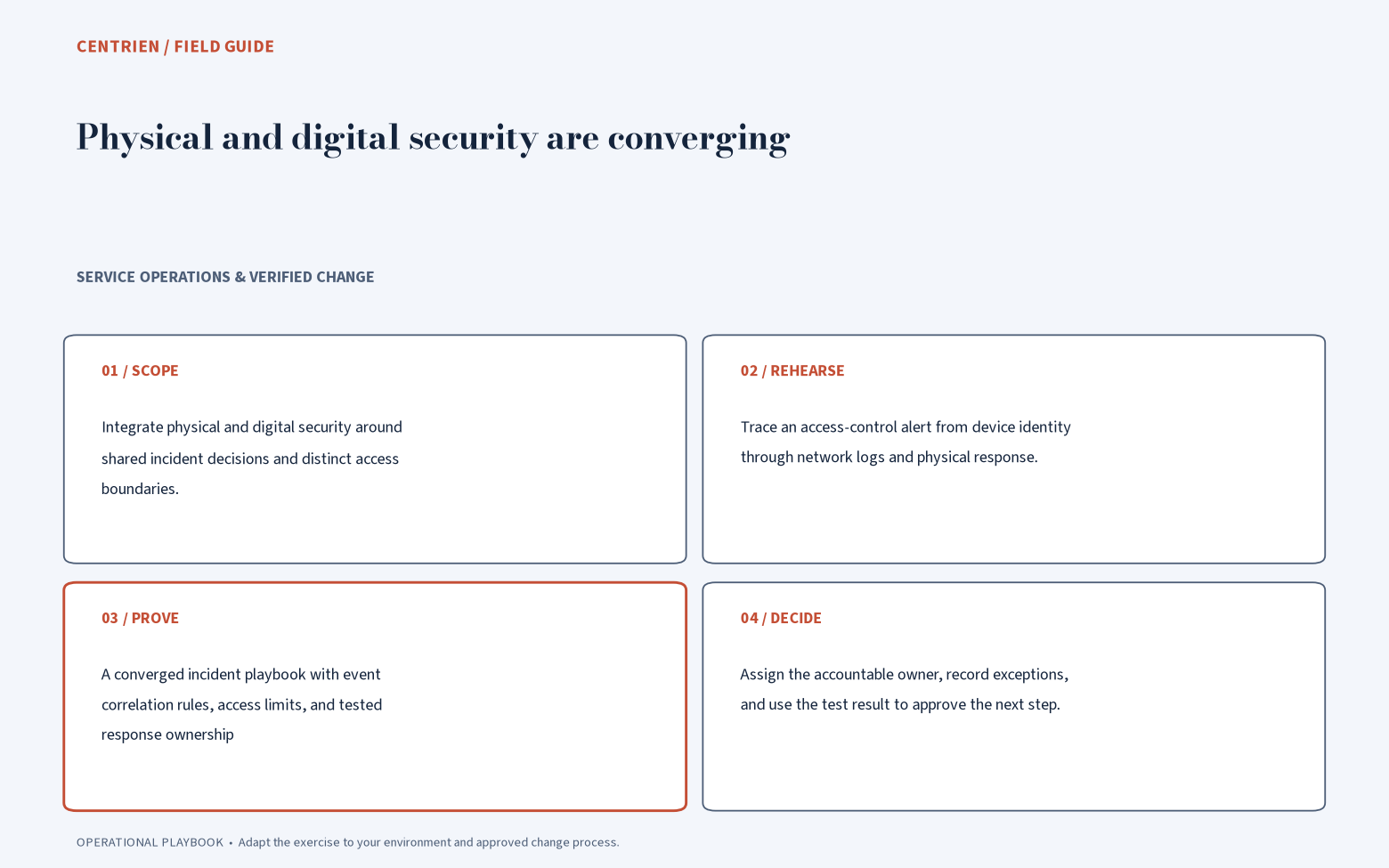
Trace an access-control alert from device identity through network logs and physical response. Verify timestamps, authorized data sharing, and the local fallback if the network is unavailable. Avoid giving either team unrestricted access to the other’s systems.
Implementation steps
- Create a service recordList the business purpose, technical dependencies, owner, support contacts, maintenance limits, and recovery requirements. Verify the record against the service rather than copying an old inventory.
- Define a useful signalIdentify the event or condition that requires a decision. Check clock synchronization, missing telemetry, alert routing, and whether the recipient has enough context and authority to act.
- Make a reversible changeDocument the expected outcome, prerequisite checks, maintenance window, and rollback trigger. Test a representative workflow and verify monitoring before expanding the change to other systems.
- Close the operational loopRecord the actual result, affected users, unresolved exceptions, and any follow-up. Have the service owner accept the outcome and update the operating procedure while the evidence is available.
Track service ownership coverage and actionable alarm coverage
| Measure | Calculation or definition | How to use it |
|---|---|---|
| Service ownership coverage | Critical services with verified owners / critical services | Investigate records with missing dependency or escalation owners. |
| Actionable alarm coverage | Critical alarms with tested delivery and response / alarms in scope | A delivered notification alone does not prove a response. |
| Change acceptance | Changes with successful business validation / changes reported complete | Show rollback, partial success, and unresolved outcomes separately. |
Example operational readiness review
Worked example. Figures are illustrative.
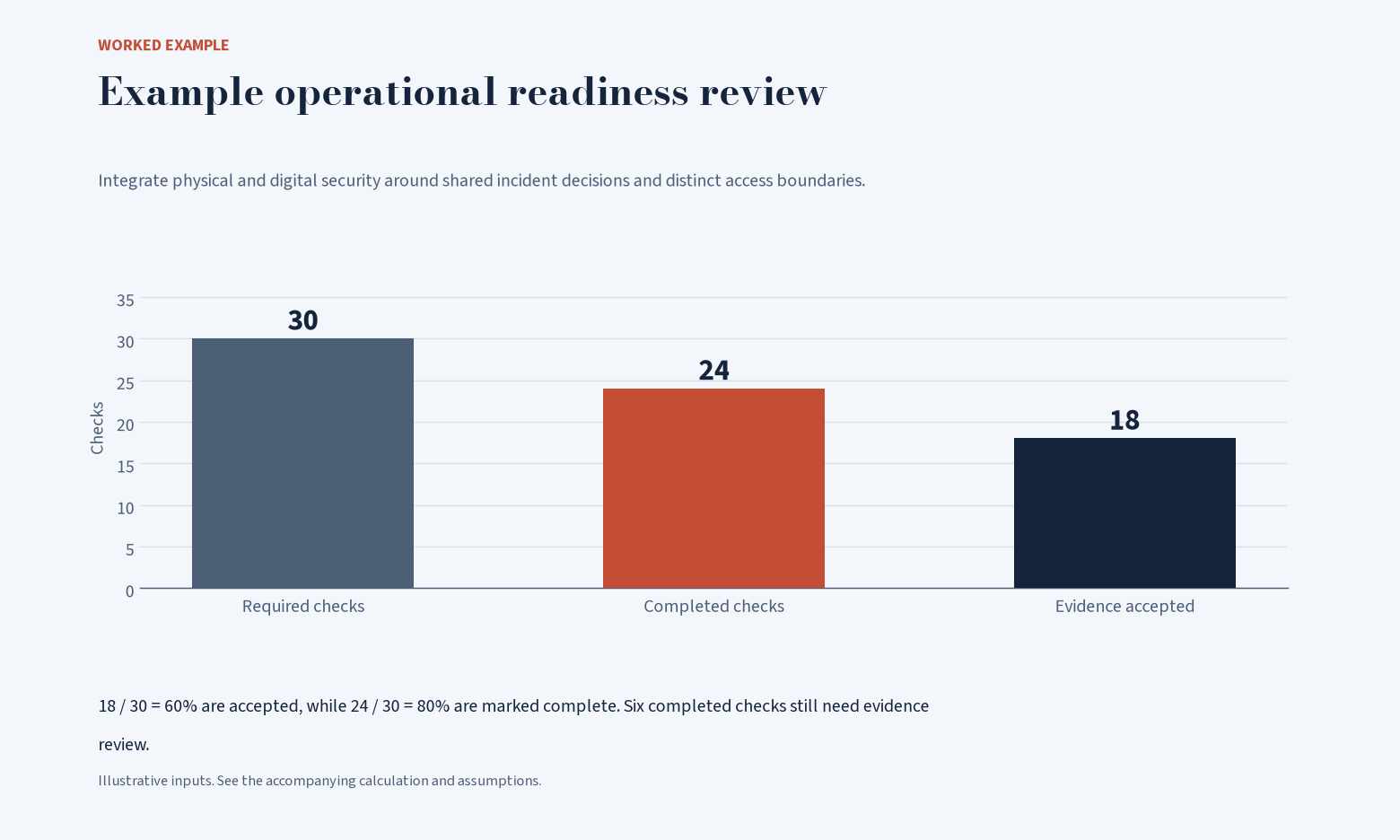
| Observation | Checks |
|---|---|
| Required checks | 30 |
| Completed checks | 24 |
| Evidence accepted | 18 |
Use the distinction to direct review effort.
The record to keep
The deliverable: A converged incident playbook with event correlation rules, access limits, and tested response ownership.
Run a joint exercise around one door or camera outage. Check the timestamps, escalation route, and fallback, then update the handoff that delayed the response.
References
- NIST Cybersecurity Framework — Use outcomes and organizational context to organize the risk discussion; a framework mapping is not a control test.
- NIST SP 800-61 Rev. 3: Incident Response — Connect preparation, detection, response, and recovery with the wider risk-management program.
Keep reading.
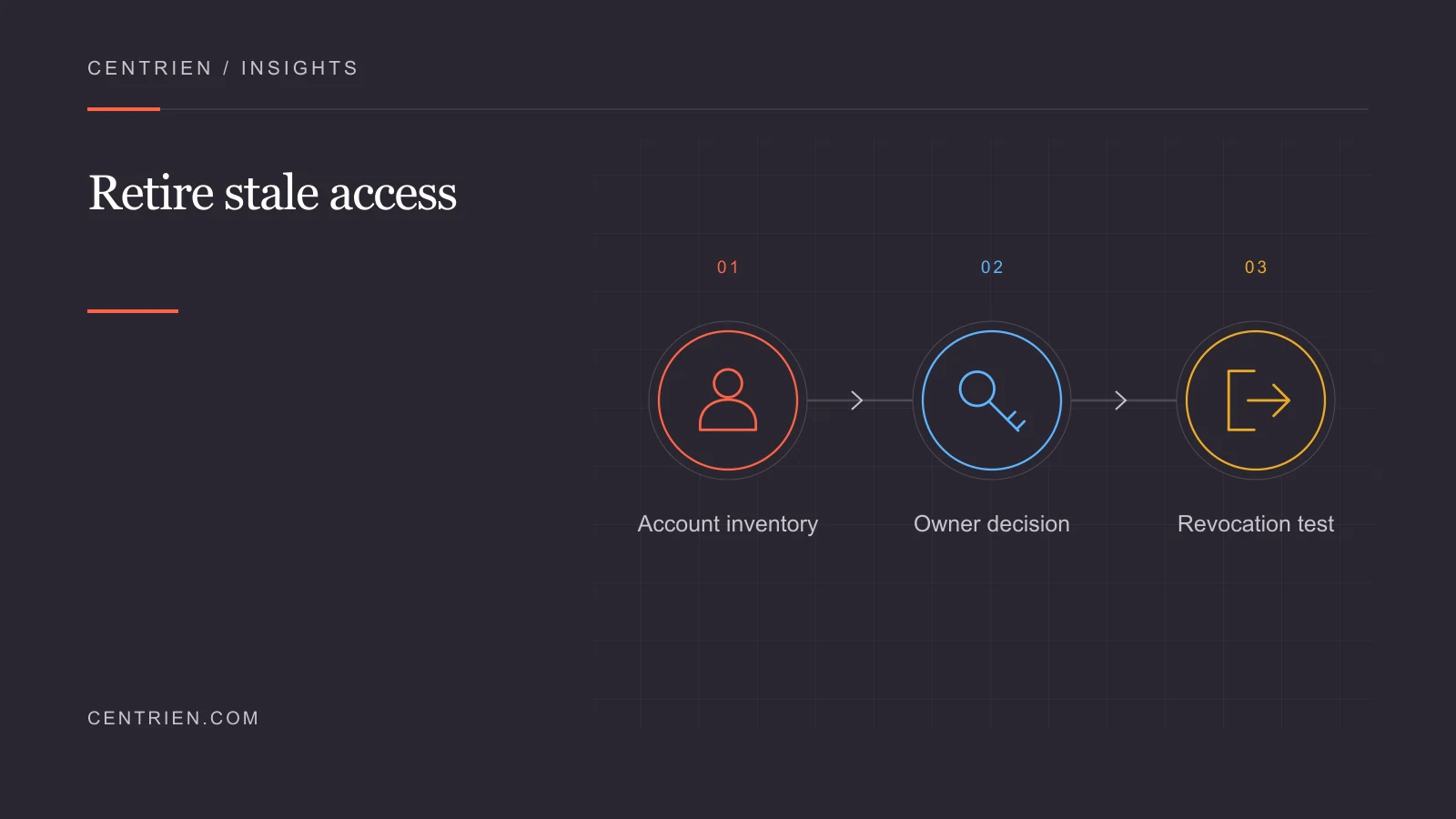
Your Access List Is a Museum. Time to Clean It Out.
An access review needs more than a list of active employees. Supplier accounts, service identities, inherited permissions, and active sessions can preserve access after the original reason has ended.
3 min read →
October 30 market close: Intel plunges, Nasdaq falls 2.86%
Intel falls 28.58% as its outlook weighs on technology. Nasdaq loses 2.86%, energy leads sector gains, and labor-cost data and weekly returns frame the Friday close.
4 min read →
October 29 market close: Alphabet sinks, small caps advance
Alphabet falls 12.64% and the Nasdaq loses 1.38%, while small caps and nine sector ETFs gain. GDP, inflation and Amazon earnings frame a sharply divided session.
4 min read →